Satellite Internet
Satellite internet gives homes, businesses, remote sites, vessels, temporary projects and distributed teams an internet path that does not depend entirely on local fibre, copper or nearby mobile towers. The right solution, however, is not simply the most popular satellite kit. A dependable deployment starts with the location, service eligibility, sky visibility, expected applications, user count, mobility requirement, power conditions, router and Wi-Fi design, security policy and support model. Fourteck helps customers compare satellite broadband, LEO connectivity, VSAT, mobile satellite data and hybrid backup architectures so the final system matches the real operating requirement instead of forcing every site into one product.
Start with business applications, users and critical devices before choosing hardware.
Obstructions, roof access, cable routing, weather exposure and maintenance access matter.
The satellite link is only one part of a reliable business network.
Coverage, activation, plan rules and mobility permissions can vary by country and service.
What Is Satellite Internet?
Satellite internet is a data connection in which a user terminal or antenna communicates with satellites rather than depending only on terrestrial last-mile infrastructure. Traffic is carried through the satellite network and connected to wider internet infrastructure through gateways, ground stations or other network interconnects. This makes satellite connectivity valuable in locations where fixed broadband is unavailable, delayed, unreliable, commercially difficult to extend or unsuitable for a mobile or temporary operation.
Modern satellite internet is not one single technology. Low Earth orbit networks can provide a broadband experience suited to many interactive applications. Traditional geostationary VSAT remains important in enterprise, maritime, industrial, broadcast, government and managed-network designs. Mobile satellite systems can prioritize reach, voice, messaging or field data rather than high broadband throughput. Multi-orbit and hybrid designs may combine satellite with fibre, 4G, 5G, microwave or another WAN connection to increase resilience. Because these categories behave differently, buying by brand name alone can create the wrong expectation.
Fourteck approaches satellite internet as a complete connectivity design. The terminal matters, but so do service rules, mounting, power, local network quality, firewall policies, Wi-Fi coverage, backup design and user demand. For a single remote cabin, the network may be simple. For a warehouse, construction camp or industrial yard, the satellite link may feed a firewall, managed switch and several access points. For an enterprise branch, the same connection may serve as secondary WAN with health checks and automated failover. A professional design starts with the requirement and then selects the technology.
Satellite Internet Types: LEO, MEO, GEO and VSAT
| Connectivity Type | Typical Strength | Good Fit | Important Buying Consideration |
|---|---|---|---|
| LEO satellite broadband | Lower propagation delay than high-orbit systems and strong general broadband capability where supported. | Homes, remote offices, backup links, temporary projects, field sites and approved mobility use. | Country eligibility, plan rules, obstruction-free sky view, terminal generation and mounting. |
| MEO connectivity | Can support enterprise and carrier-grade architectures with characteristics between LEO and GEO. | Large enterprise, telco, government and regional network requirements. | Usually a designed service rather than a simple retail kit. |
| GEO / traditional VSAT | Mature managed-service options, wide beams and established enterprise use cases. | Industrial sites, maritime, oil and gas, remote infrastructure and controlled managed networks. | Higher propagation delay, antenna sizing, service plan, committed capacity and installation complexity. |
| Mobile satellite data | Portable or specialized connectivity beyond normal terrestrial coverage. | Field teams, emergency operations, remote travel, telemetry and specialist mobility. | Performance may be designed for reach and reliability rather than broadband-like throughput. |
The terms above describe broad network approaches, not guaranteed performance levels. Actual throughput, responsiveness, availability and service quality depend on operator design, congestion, plan class, geography, weather, terminal type, network routing and installation conditions. Fourteck therefore recommends choosing according to the workload and site rather than assuming one orbit or one brand is always superior.
A Better Way to Choose: Requirement → Capability → Benefit → Limitation
Remote Office
Requirement: cloud access, email, VoIP and video meetings before fibre arrives. Capability: broadband satellite link with proper router and Wi-Fi distribution. Benefit: productive site operation without waiting for local cabling. Consideration: verify service eligibility, sky visibility, bandwidth plan and power stability.
Business Backup
Requirement: keep essential services online during primary WAN failure. Capability: secondary satellite WAN connected to a dual-WAN router or firewall. Benefit: path diversity from local cable failure. Consideration: test failover rules, DNS, VPN behavior, public addressing needs and critical traffic priority.
Temporary Project
Requirement: short-term internet for construction, events, surveys or site cabins. Capability: relocatable terminal where the selected service permits it. Benefit: faster deployment than permanent terrestrial civil works. Consideration: mounting, theft protection, repeated setup, cable protection and location-specific plan rules.
Marine Operation
Requirement: onboard internet for crew, operations or owner use. Capability: marine-approved service and suitable terminal. Benefit: connectivity beyond coastal mobile coverage. Consideration: vessel motion, mounting, obstruction, route coverage, plan class and permitted in-motion use.
Where Satellite Internet Makes the Most Sense
Satellite internet is strongest when it solves a location or resilience problem that terrestrial networks cannot solve efficiently. It is often requested for construction sites, desert camps, farms, remote villas, mining or energy locations, emergency-response teams, field offices, research locations, warehouses at the edge of coverage, temporary events, mobile work crews and vessels. It can also support branch continuity when an organisation does not want both primary and backup circuits to depend on the same local underground route.
For remote business sites, the link can support email, collaboration platforms, ERP access, cloud dashboards, remote support, point-of-sale traffic, CCTV viewing, telemetry and general browsing. The application mix matters because a small amount of transactional traffic behaves very differently from many users streaming video. Upload-heavy CCTV or cloud backup can also change the requirement. Fourteck therefore maps users and applications before recommending the terminal, service plan and local network.
For homes and villas, buyers usually want reliable browsing, remote work, video calling, education and entertainment. The satellite terminal may deliver acceptable connectivity to the building, but whole-property Wi-Fi is a separate design problem. Large villas, farms, guest houses or multi-building properties may need mesh Wi-Fi, wired access points, point-to-point wireless links or outdoor coverage rather than relying on the satellite router alone.
For emergency and contingency use, satellite connectivity can provide an independent communications path when local infrastructure is disrupted. That does not automatically make every deployment resilient. The site still needs protected power, suitable mounting, spare cabling strategy, known operating procedures and tested network failover. A backup system that has never been tested may fail when it is finally needed.
Satellite Internet for Business Continuity and Failover
A satellite connection is especially valuable as a secondary WAN because it can be physically diverse from terrestrial fibre. A branch office, clinic, retail location, warehouse or project site may use fibre or 5G as the primary circuit and satellite as a backup. A dual-WAN firewall or router monitors the primary path and switches selected traffic to satellite when health checks fail. When the primary service returns, traffic can be restored automatically according to the configured policy.
Good failover design is more detailed than plugging two internet connections into a router. The IT team should decide which applications are allowed over the backup link, whether guest Wi-Fi should be disabled during failover, how voice and video are prioritized, whether site-to-site VPN tunnels will rebuild correctly, how DNS behaves, and whether any application depends on a fixed or publicly routable IP address. Some satellite services use carrier-grade NAT or have plan-dependent addressing options, so this must be checked before designing inbound access.
For larger businesses, SD-WAN can combine multiple connections and steer traffic according to application, latency, packet loss or link status. Satellite can become one member of a broader WAN design that includes fibre, leased lines, 4G/5G and microwave. This is often a better model than treating satellite as a completely separate network because users retain controlled access to the same enterprise security policies and applications.
LEO Satellite Internet and Starlink as One Example
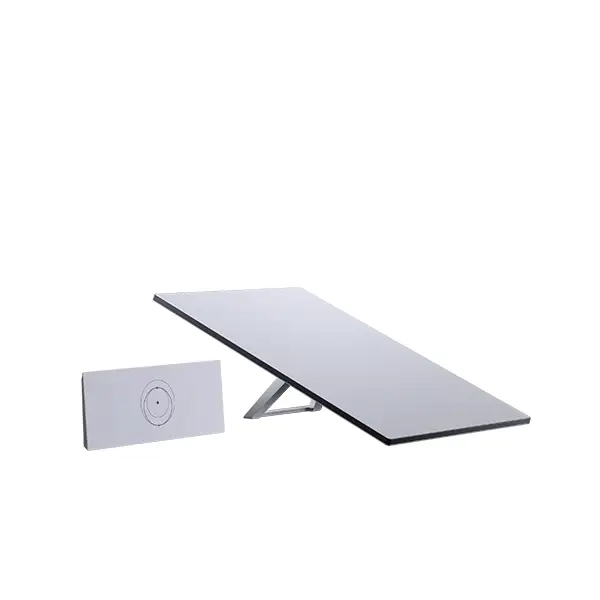
Low Earth orbit broadband has changed customer expectations for satellite internet because it can support more interactive workloads than many older satellite systems. Starlink is one well-known example and currently presents business options for fixed sites, land mobility, maritime and aviation use, with plan and eligibility rules that vary by market and application. Fourteck maintains dedicated guidance for buyers comparing Starlink products and use cases, as well as a focused Starlink UAE resource.
The important buying principle is that a LEO terminal is not automatically suitable for every location or every movement profile. Fixed, relocatable, in-motion, maritime and aviation use may require different service classes, hardware, mounting and approvals. Hardware generations can also differ in power design, networking ports, environmental suitability and mounting options. Always verify the exact current service and terminal rather than buying based on an old video, marketplace listing or specification copied from another country.
For a practical fixed-site deployment, Fourteck reviews the proposed mounting point, obstruction risk, cable route, router location, power source and downstream network. Customers who need an installation-oriented path can review Starlink supply and installation guidance. Buyers who already know they need a common fixed-site kit can also review the Starlink Standard Kit Dubai page for product-specific planning.
VSAT and Managed Satellite Connectivity
VSAT remains an important part of the satellite internet market, especially for enterprises that need a managed design rather than a retail-style terminal. A VSAT solution can be built around a defined antenna, modem, satellite capacity, network operations model, service-level structure and application requirement. It is common in industrial operations, maritime connectivity, remote infrastructure, energy, broadcast, government, banking, telemetry and multi-site networks where service design and operational control can matter more than simple plug-and-play setup.
Traditional geostationary satellite systems have higher propagation delay than LEO networks because the satellite is much farther from Earth. That characteristic does not make VSAT obsolete. A managed GEO service may still be the correct solution when coverage, committed capacity, network control, private networking, specialized antennas, regulatory approvals or an established operational model are the deciding factors. In some enterprise projects, the best design can even combine different satellite systems or pair satellite with terrestrial circuits.
When evaluating VSAT, buyers should define whether they need shared broadband, dedicated or committed information rate, private network transport, public internet breakout, static addressing, voice support, video, CCTV backhaul, telemetry, managed firewall, monitoring or 24/7 operations support. Antenna size, band, pointing, installation location, wind loading, grounding and cable distance also become part of the engineering work. Fourteck can help structure the requirement so suppliers and service providers quote against the same technical objective.
Mobile Satellite Data: When Reach Matters More Than Raw Speed
Not every satellite data requirement needs broadband-class speed. Field teams, emergency crews, remote travelers, security personnel and specialized industrial users may value connectivity in isolated areas more than high throughput. Mobile satellite terminals and handsets can provide voice, messaging and data services through networks designed for wide geographic reach. Thuraya, Iridium and Inmarsat-family services are examples of satellite communications ecosystems that serve mobility and remote operations, although available products, capabilities and geographic coverage differ.
Thuraya documentation, for example, distinguishes between different satellite data products and service types rather than presenting every device as a broadband replacement. That distinction is useful for buyers. A handheld or compact field terminal may be excellent for email, messaging, tracking, emergency communication or limited data while being unsuitable as the primary internet link for a busy office. The correct question is therefore not “Which satellite system is fastest?” but “What application must work, from what location, with how many users and under what mobility conditions?”
Fourteck can help customers compare portable satellite communications with broadband satellite terminals. For some organizations, a strong continuity plan uses both: a broadband satellite link for normal remote-site operations and a separate mobile satellite phone or field terminal as an emergency communications layer.
Site Survey: The Most Important Step Before Installation
A satellite internet system needs a suitable view of the sky in the direction or area required by the selected network. Buildings, walls, trees, cranes, masts, HVAC equipment and other obstructions can degrade or interrupt the link. The site survey should identify a safe mounting point, the cable route to the indoor network, power availability, access for maintenance and any structural or property restrictions.
In desert, coastal and industrial environments, the survey should also consider heat, dust, salt exposure, wind, vibration, equipment protection and how the installation will be serviced. On a vessel or moving platform, antenna placement must account for motion and onboard obstructions. On temporary sites, portability and repeatable setup may matter more than permanent aesthetics.
Installation Planning: From Roof to Router
A good installation creates a safe, serviceable path from the outdoor terminal to the indoor network. The mounting method should match the hardware instructions, surface, wind exposure and use case. Cables should be protected from sharp edges, doors, standing water, heavy foot traffic and excessive tension. Penetrations should be sealed appropriately. Power supplies and network equipment should be installed where heat and dust are manageable and where the customer can access them for support.
Router location is often overlooked. Placing the satellite router beside the cable entry point may be convenient for the installer but poor for Wi-Fi. In a villa, warehouse or office, the best result may be to keep the satellite hardware in a secure technical area and extend Ethernet to properly positioned access points. This separates the WAN function from the Wi-Fi coverage design. It also makes future firewall, VLAN or managed-network upgrades easier.
After physical installation, commissioning should include terminal status, internet reachability, local Ethernet link, Wi-Fi coverage, DNS resolution and application checks. For a business site, Fourteck recommends testing representative workloads such as cloud login, voice calls, video conferencing, VPN access and remote management. If the connection is used for failover, the team should deliberately disconnect the primary WAN and confirm that critical traffic moves to satellite as expected.
Performance: What Determines Speed, Latency and User Experience?
Satellite internet performance is affected by more than the advertised service class. Orbit, network congestion, plan priority, beam capacity, weather, terminal quality, obstruction, installation, Wi-Fi conditions and the remote internet destination can all influence the user experience. A speed test taken once on a quiet afternoon does not describe how the connection will behave under load, during peak usage or when several users begin large uploads.
Latency is important for interactive applications such as voice, remote desktop, online transactions and video meetings. LEO networks generally reduce the satellite propagation component compared with geostationary systems, while traditional GEO services have a larger physical round-trip distance. However, total application latency also depends on network routing, local Wi-Fi, VPN overhead and the destination service. Businesses should test real applications instead of judging the link only by a single ping number.
Upload capacity is another planning point. Remote CCTV, cloud backup, large CAD files, media production and continuous synchronization can consume significant upstream bandwidth. If these workloads run without control, they may reduce call quality or browsing performance for other users. Traffic shaping, scheduled backups, application policies and separate guest networks can improve the experience even when the satellite service itself does not change.
For large camps or shared networks, the local LAN often becomes the bottleneck. Too few access points, congested 2.4 GHz channels, weak coverage, overloaded consumer routers or uncontrolled guest use can create complaints that look like “satellite problems.” Fourteck separates WAN testing from LAN and Wi-Fi testing so the true cause can be identified.
Wi-Fi, Ethernet, Firewall and Network Integration
The satellite terminal should be treated as an internet edge, not the entire network design. Small homes may use the included router if coverage is sufficient. Business sites often need a firewall, Ethernet switching and multiple access points. Warehouses may require ceiling or wall-mounted Wi-Fi, while outdoor camps may need weather-rated access points or point-to-point wireless links. Multi-building properties can use fibre or wireless bridges to distribute the connection without placing every building behind an independent satellite terminal.
A firewall can add policy control, VPN, web filtering, application visibility, guest isolation and dual-WAN failover. Before integrating third-party equipment, check whether the satellite platform supports bridge, bypass or Ethernet handoff in the relevant hardware generation and configuration. The implementation may vary by operator and terminal. Avoid assuming a setting found in an old online tutorial applies to the current device.
For voice systems, QoS and traffic control can help protect call quality. For CCTV, bandwidth planning should account for camera count, resolution, frame rate, recording architecture and how often video is viewed remotely. For cloud applications, the IT team should consider session sensitivity, VPN requirements and whether any services whitelist source IP addresses. These details determine whether a simple router is enough or a managed firewall is more appropriate.
Power, UPS and Off-Grid Planning
Remote connectivity is only useful when the site can power it. Satellite terminals, routers, switches and access points all contribute to the energy budget. A generator-powered construction camp has different constraints from a solar-powered field station or a vessel with DC distribution. Buyers should verify the official power requirements for the selected terminal and then design the UPS, inverter or DC conversion around that exact hardware.
For offices, a UPS can keep the satellite terminal and core network alive during short utility interruptions. For generator sites, voltage stability and transfer events should be considered. For solar systems, the designer must account for average and peak load, battery autonomy, seasonal sunlight and any heating or environmental functions used by the hardware. It is risky to size an off-grid system from a single informal power estimate found online.
Power architecture also affects failover. If the primary fibre modem, firewall and satellite terminal are on different UPS systems, a power outage may create unexpected routing behavior. Fourteck recommends mapping all equipment in the connectivity chain so the backup WAN remains usable when the event that triggered it is a power problem rather than a carrier outage.
Security Considerations for Satellite-Connected Sites
Satellite internet should be secured using the same disciplined principles as any other WAN connection. The organization should use a supported firewall or router, strong administrative credentials, current firmware, secure Wi-Fi authentication, segmented guest access and controlled remote management. Public-facing services should be minimized. Where remote access is required, a business VPN or secure zero-trust approach is usually preferable to exposing devices directly to the internet.
Addressing architecture matters. Some satellite services may use NAT that prevents unsolicited inbound connections, while business plans may offer different networking options. If a customer needs inbound VPN, remote camera access, hosted services or IP whitelisting, the requirement must be checked before purchase. A design can often work around NAT by using outbound-initiated VPNs, cloud-managed systems or secure tunnels, but this should be planned rather than discovered after installation.
Industrial and remote sites should also protect management interfaces from general user networks. CCTV cameras, IoT gateways, access-control systems and staff devices can be placed in separate VLANs with only necessary communication permitted. Satellite bandwidth is valuable, so security controls that prevent malware, uncontrolled updates and unnecessary cloud synchronization can also protect performance.
Satellite Internet for Construction, Oil & Gas and Remote Industry
Construction and industrial projects often begin before fixed telecom infrastructure reaches the site. Project managers still need email, drawings, cloud collaboration, ERP, CCTV, access control, safety reporting and communication with head office. Satellite internet can provide an early-stage connection and later become backup service after fibre is installed. For temporary projects, the ability to relocate equipment can be valuable when permitted by the selected service and hardware.
Oil, gas and energy environments require extra attention to safety, site rules, harsh conditions and network segmentation. A supervisor cabin may need only a small business network, while a larger camp or remote facility may require multiple access points, switches, firewall policies, user bandwidth control and remote CCTV. Fourteck has a dedicated resource for satellite internet for remote oilfields in the UAE that expands on those requirements.
In remote industry, operational technology and corporate IT should not automatically share one flat network. Satellite connectivity can carry both business and monitoring traffic, but segmentation and prioritization help prevent user activity from affecting critical telemetry. The detailed architecture depends on the site, applications and security policy.
Marine Satellite Internet
Marine connectivity has different requirements from a fixed roof installation. A vessel moves, changes orientation and may travel across service boundaries. Masts, radar arches, superstructure and other equipment can obstruct the terminal. Salt, vibration, wind and constant exposure increase installation demands. The chosen plan must explicitly support the route and movement profile; a land service should never be assumed to be valid offshore.
Yachts and commercial vessels may need internet for owner and guest use, crew welfare, email, operational reporting, chart or weather data, remote monitoring and video calls. Business vessels may also need VPN connectivity, secure Wi-Fi zones and bandwidth rules between operational and guest traffic. Some networks provide purpose-built maritime service options, while managed VSAT remains relevant for many fleets and enterprise requirements.
Fourteck’s Satellite Internet for Boats Dubai page provides a more marine-focused buying path. Before purchase, confirm vessel type, typical routes, user count, application demand, mounting location and service eligibility. The same terminal that works well at a marina may require a different service plan or hardware configuration for continuous in-motion offshore use.
Satellite Internet for Homes, Villas and Rural Properties
Rural homes and villas may use satellite broadband when local fibre is unavailable, when mobile coverage is weak or when the installation lead time for terrestrial service is too long. The homeowner should still compare all available options. Strong 5G or fixed wireless can be simpler and may provide excellent performance. Fibre is often preferable when available and stable. Satellite becomes particularly useful when location, terrain or infrastructure leaves a gap.
Home buyers should estimate how many users will stream video, work remotely, join video meetings, play online games, use smart-home systems or upload files. Wi-Fi coverage should be planned separately from internet capacity. Thick walls, multiple floors, detached rooms and outdoor spaces may require additional access points. A speed test beside the satellite router does not prove that a bedroom or office at the far end of the property will have the same experience.
For homes used as remote-work locations, power backup can be important. A UPS supporting the satellite terminal, router and laptop can keep essential work running through short interruptions. If the property relies on solar power, terminal consumption should be verified from the exact hardware documentation and included in the overall energy design.
UAE Deployment Considerations
Customers in Dubai, Abu Dhabi, Sharjah, Ajman, Ras Al Khaimah, Fujairah and Umm Al Quwain may consider satellite internet for remote properties, construction projects, desert sites, warehouses, events, backup connectivity, marine operations and field teams. Urban sites can have excellent fibre and mobile service, so satellite often appears as a continuity, temporary-site or special-location solution rather than the default primary connection.
Dubai projects may involve rooftop access rules, building management approval, high-rise obstruction, temporary event installations, Jebel Ali logistics sites, industrial areas, villas or mobile project teams. Abu Dhabi and Al Ain requirements can include large compounds, remote energy-support operations and desert facilities. Northern Emirates users may have rural, coastal, farm, mountain or industrial locations where terrestrial service quality varies. The installation approach should match the actual property rather than a generic city label.
Availability and permitted service use must be confirmed for the exact operator, plan, terminal and location before ordering. Fourteck does not assume that a service marketed in one country or for one mobility class can be activated everywhere. Buyers looking specifically for local guidance can use the dedicated Satellite Internet Dubai page or compare options on the Satellite Internet Providers UAE guide.
GCC Connectivity Planning
Across the GCC, satellite internet requirements often come from construction, oil and gas, logistics, ports, utilities, remote hospitality, border operations, marine activity and business continuity. Companies may coordinate projects from the UAE while deploying equipment in Saudi Arabia, Oman, Kuwait, Qatar or Bahrain. Each country can have different service availability, import procedures, frequency regulation, activation rules and approved operating environments, so regional deployment should not be treated as a simple copy of a UAE installation.
Desert projects need robust power and protected cabling. Coastal and marine sites must consider salt and weather exposure. Temporary construction camps may prioritize relocation and rapid setup. Corporate branches may care more about firewall integration, SD-WAN, VPN and central monitoring. A regional organization can standardize the network architecture while still adapting the satellite service and terminal to local rules.
For multi-country projects, Fourteck can help customers prepare a requirement matrix containing country, city or coordinates, site type, mobility requirement, expected users, applications, power source, existing network, target deployment date and desired support scope. This makes supplier comparison clearer and reduces the risk of buying hardware before service suitability is confirmed.
Africa: Remote Site and Business Connectivity
Satellite connectivity can be especially useful for projects in areas where fixed infrastructure is sparse, mobile networks are inconsistent or operations are far from major cities. Fourteck receives requirements connected with Kenya, Uganda, Tanzania, Ghana, Nigeria and wider African projects for remote offices, NGOs, farms, mining, construction, hospitality, security, education, healthcare, retail, logistics and backup communication.
Africa is not one uniform connectivity environment. A Nairobi office has different choices from a remote Kenyan field site. Kampala, Entebbe, Dar es Salaam, Accra and Lagos have strong urban telecom ecosystems, while rural projects may have limited last-mile options. The right architecture may be fibre plus satellite backup in a city, satellite plus solar at an off-grid field station, or a managed VSAT design for industrial operations. Country-specific service eligibility and local regulation must be checked before deployment.
Power quality can be as important as signal coverage. Sites that use generators, inverters or solar should size backup energy for the satellite terminal and local network. Dust, heat, rain and lightning exposure should also influence mounting, enclosure, grounding and maintenance planning. For organizations operating across several countries, standardizing routers, firewalls and Wi-Fi can simplify support while allowing different satellite services at the WAN edge.
How to Compare Satellite Internet Providers
| Decision Area | Questions to Ask | Why It Matters |
|---|---|---|
| Coverage and eligibility | Is the exact site and intended movement profile supported? | Coverage maps and legal/plan eligibility are not always the same thing. |
| Hardware | Which terminal generation, antenna, router, mount and cable set are included? | Different kits can have different interfaces, environmental ratings and mobility suitability. |
| Performance | What performance range is realistic at this location and plan class? | Peak marketing numbers do not describe congestion or application behavior. |
| Data policy | Is service unlimited, prioritized, metered, fair-use controlled or sold in blocks? | The monthly experience and cost depend on how data is treated. |
| Mobility | Is stationary relocation, in-motion land, maritime or aviation use permitted? | Different movement classes may require separate plans and hardware. |
| Networking | Can it integrate with firewall, VPN, Ethernet, public IP or SD-WAN requirements? | Business applications may need more than basic internet access. |
| Support | Who handles installation, hardware troubleshooting, service tickets and replacement? | Remote sites need a clear operational support path. |
Satellite Internet Price: What Actually Drives Cost?
There is no single reliable “satellite internet price” that applies to every customer. Total cost depends on the service, terminal, plan, data policy, country, quantity, mounting accessories, installation complexity, network equipment, mobility class and support requirement. Enterprise VSAT may be priced very differently from a retail broadband kit. Maritime and aviation services have their own hardware and service structures. A temporary site may also need poles, ballast, outdoor cabinets, UPS systems or network distribution equipment that is not included with the terminal.
Buyers should separate one-time and recurring costs. One-time costs can include hardware, mounts, shipping, installation, cable work, firewall, switch, access points and UPS. Recurring costs can include the satellite service plan, prioritized data, managed support, static networking features or other subscriptions. Project organizations should also consider relocation, spare equipment and site visits.
Fourteck does not recommend comparing quotations only by the terminal price. Two quotes can appear to describe the same satellite system while including different generations, mounts, service classes or support scope. A useful quotation should state what is included, what is excluded, the assumptions about service availability and the customer responsibilities. Current price, stock and activation eligibility should be confirmed at the time of ordering rather than assumed from old online listings.
Procurement Checklist
Common Mistakes to Avoid
Buying before checking eligibility: a terminal may be physically available while service activation, plan type or mobility use is different in the target country. Confirm the operating environment first.
Choosing by speed headline only: speed does not reveal latency, priority policy, data rules, upload behavior, congestion or whether the application needs a public IP.
Ignoring obstructions: partial sky blockage can create intermittent problems that are difficult to solve with router changes. Site location should be checked before drilling or permanent mounting.
Assuming the included Wi-Fi covers the whole property: the WAN can be excellent while users still experience weak signal. Design Wi-Fi for the building size and materials.
No power backup: remote sites frequently lose connectivity because the network loses power, not because the satellite service fails. Protect the full chain, including terminal, router and switches.
No failover test: a backup WAN is not complete until the team has forced a primary failure and confirmed that critical applications continue to work.
Using the wrong service class for mobility: a plan intended for fixed or portable use should not be assumed to support in-motion or offshore operation. Verify current operator rules.
When Satellite Internet Is Not the Best Choice
Satellite is powerful, but it should not replace a better terrestrial option simply because it is technically interesting. If reliable fibre is already available at a reasonable cost and the site does not need path diversity, fibre may provide the most predictable capacity and latency. Strong 5G can be ideal for a temporary site close to a good tower. Microwave can be excellent when two locations have clear line of sight. A professional recommendation compares all realistic choices.
Satellite can also be unsuitable when there is no practical sky view, when the site cannot provide safe mounting or power, when the required service is not approved for the region, or when an application has very specific latency, inbound-addressing or guaranteed-bandwidth requirements that the selected satellite product cannot satisfy. In those cases, Fourteck can help evaluate an alternative WAN or a hybrid design.
Why Fourteck for Satellite Internet Planning?
Fourteck focuses on the complete requirement rather than selling a terminal in isolation. We help customers define the site, user load, business applications, mobility requirement, installation conditions, local networking, firewall, Wi-Fi and backup strategy before selecting a product category. This is especially useful for customers comparing LEO broadband, VSAT, portable satellite systems and multi-WAN business designs.
Our role can include product guidance, availability discussion, installation planning, mounting and cable considerations, router and firewall integration, Wi-Fi design, failover planning and project coordination. The exact service scope depends on location and requirement. We do not assume coverage, activation, partner status, stock or guaranteed performance without verification.
Customers with a location-specific project can start with the Dubai satellite internet guide. International buyers can review Satellite Internet Worldwide. Starlink-focused buyers can use the Starlink brand guide before moving to a specific kit or service page.
Satellite Internet FAQ
What is satellite internet?
Satellite internet is a connection that uses a satellite terminal or antenna to exchange data through an orbiting satellite network and onward to the wider internet. It is useful when terrestrial connectivity is unavailable, delayed, unreliable or needs a diverse backup path.
Is satellite internet suitable for business?
Yes, when the selected service and network design match the workload. Businesses use satellite for remote offices, project sites, branch backup, industrial operations, mobile teams and other locations where normal WAN options are limited. Application demand, service class, firewall integration and support should be planned before deployment.
Does satellite internet need a clear view of the sky?
Most satellite terminals require a suitable open view of the sky for the selected network. Buildings, trees, cranes, masts and other obstacles can interrupt service. The exact field of view depends on the technology and terminal.
Is LEO satellite internet faster than VSAT?
LEO systems generally have lower satellite propagation delay than geostationary VSAT and can provide strong broadband performance. However, “faster” depends on the actual service, plan, congestion, terminal, coverage and application. Managed VSAT can still be the better fit for certain enterprise requirements.
Can satellite internet work as backup for fibre?
Yes. A dual-WAN router, firewall or SD-WAN appliance can use satellite as a secondary path when the primary connection fails. The design should be tested for VPN, DNS, public-IP requirements and critical application behavior.
Can I use satellite internet for CCTV?
Yes, but camera upload traffic can be significant. The design should consider camera count, bitrate, recording location, remote viewing frequency, bandwidth policy and whether the video platform works properly through the selected network addressing model.
Can I use my own firewall and Wi-Fi system?
Often yes, depending on the terminal and service configuration. Businesses commonly integrate satellite links with third-party firewalls, switches and access points. Confirm the available Ethernet or bypass options for the exact hardware generation.
Does satellite internet work on moving vehicles?
Only when the selected operator, plan, hardware and country rules support the intended in-motion use. A relocatable service that works after parking is not automatically approved for use while moving.
Does satellite internet work at sea?
Marine satellite internet is available through services designed for vessels, but route coverage, in-motion use, hardware and plan eligibility must be confirmed. Vessel mounting also requires attention to obstructions, motion, salt exposure and onboard networking.
How much does satellite internet cost?
Cost varies by operator, hardware, country, plan, data policy, mounting, installation, networking and support. Ask for a quotation based on the actual location and use case rather than relying on an old price from another market.
Can satellite internet support VoIP and video meetings?
Many modern satellite services can support voice and video applications, but quality depends on latency, packet loss, bandwidth, congestion and local Wi-Fi. Business deployments should test the actual conferencing and voice platforms used by the organization.
What information should I send Fourteck for a quotation?
Provide the country and site location, whether the site is fixed or moving, user count, main applications, preferred deployment date, power situation, existing router or firewall, mounting constraints and whether installation or network integration is required.
Plan the Right Satellite Internet Solution
A reliable satellite internet project starts with the requirement, not a product name. Share the operating location, applications, number of users, mobility needs, installation environment and existing network. Fourteck can then help compare suitable satellite connectivity directions, identify important technical constraints and prepare a clearer path for hardware, service, installation and network integration.