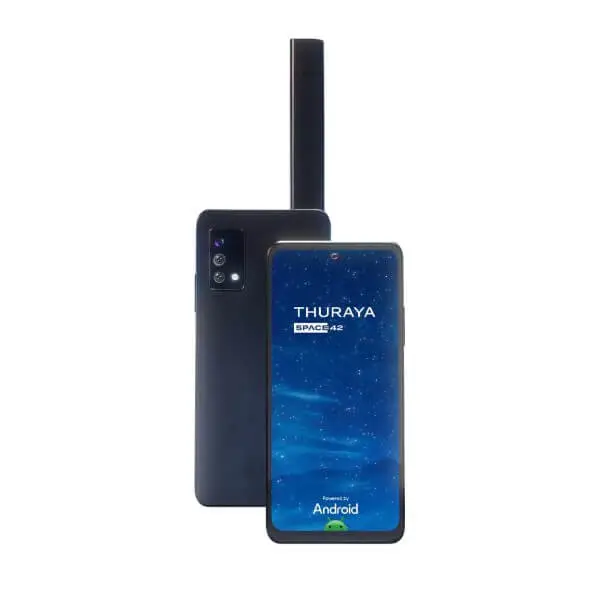
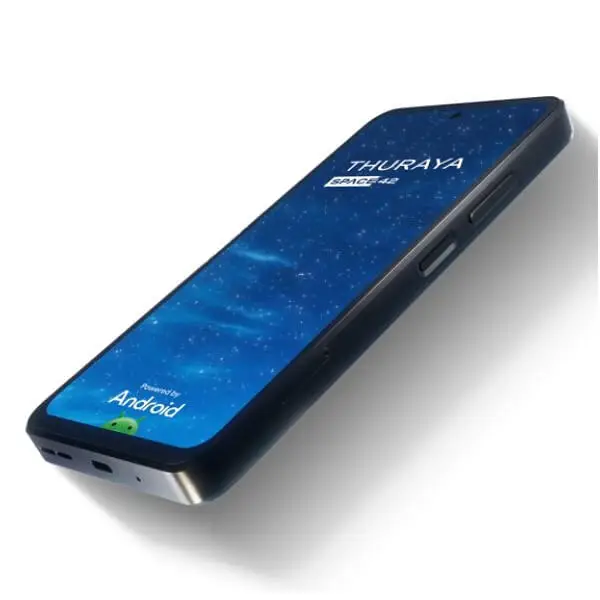
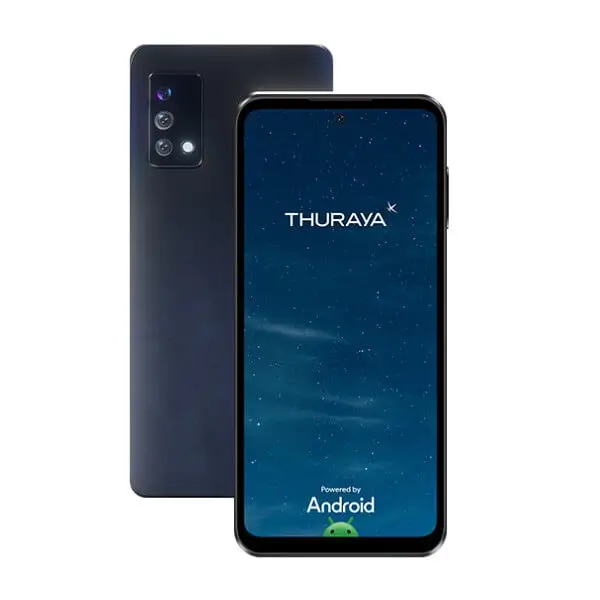
Thuraya One Dubai – 5G Android Satellite Smartphone for UAE
Thuraya One Dubai is designed for buyers who want one modern Android smartphone for normal cellular use and a separate satellite communication path for calls and SMS when terrestrial coverage is unavailable. Instead of carrying a conventional mobile phone and a second satellite handset, the Thuraya One brings 5G/4G/3G/2G cellular connectivity and Thuraya L-band satellite capability into a single device with a retractable satellite antenna. For Dubai businesses, desert travellers, field engineers, energy teams, remote-site supervisors, emergency planners and mobile executives, the value is not simply that the phone has satellite technology. The real value is the operational transition between connected city environments and locations where normal mobile service cannot be relied upon. Fourteck helps customers evaluate whether Thuraya One fits the actual route, service requirement, user profile, SIM plan, outdoor operating conditions, charging plan and backup-communication procedure before a quotation is prepared.
30-second Thuraya One buyer verdict
Thuraya One is best suited to users who want one everyday Android smartphone for normal cellular service and a satellite voice/SMS fallback when they move beyond working mobile coverage. It is especially relevant for Dubai and UAE buyers who travel between city, highway, desert, industrial and remote project environments and do not want to carry a separate conventional smartphone and satellite handset. The satellite function still depends on a suitable Thuraya service, an extended satellite antenna and a clear line of sight to the satellite.
Professionals, travellers and field teams that need ordinary smartphone use plus satellite calling and SMS outside cellular coverage.
Personal voice and text continuity. It should not be purchased as a replacement for a dedicated satellite broadband terminal.
Confirm destination, service/SIM suitability, user workflow, required accessories, charging method and whether the real requirement includes broadband data.
Satellite mode needs outdoor visibility. Towers, roofs, mountains, trees and other obstructions can block the satellite path even when cellular service works normally.
The most important fact: Thuraya One is not a broadband satellite internet handset
Buyers searching for Thuraya One Dubai often use phrases such as satellite smartphone, satellite internet phone, 5G satellite mobile or phone that works without a mobile tower. That search language can create the wrong expectation. Thuraya One is a full Android smartphone for ordinary cellular connectivity, including normal mobile data use where a compatible cellular service is available. When the user is beyond working terrestrial coverage, the Thuraya satellite mode is intended for voice calls and SMS. It should therefore be evaluated as a dual-mode communications device rather than as a pocket replacement for a dedicated broadband satellite terminal. Any multi-megabit or gigabit smartphone data figures shown in technical documentation refer to compatible terrestrial cellular modes, not to Thuraya satellite broadband.
This distinction matters for procurement. A project manager who needs emergency calling from a desert inspection route may find the Thuraya One highly relevant. A construction camp that needs Microsoft Teams, cloud access, CCTV backhaul, ERP sessions and Wi-Fi for many users needs a different class of satellite internet solution. A marine user may also require a dedicated approved maritime terminal instead of relying on a handheld device for vessel-wide connectivity. Fourteck separates these requirements early so that the customer does not buy a voice-first satellite smartphone for a broadband job it was not designed to perform.
Use the handset as a modern Android smartphone on compatible 5G, 4G, 3G or 2G mobile service. Normal app data and internet use depend on the cellular network and plan.
Use Thuraya satellite connectivity for calls and SMS when cellular service is unavailable, with the antenna extended and a suitable line of sight to the satellite.
For multi-user internet, remote office data, cloud access, video applications or site Wi-Fi, plan a dedicated satellite data solution rather than assuming the phone provides satellite broadband.
Match the device to the route, team, SIM, subscription, power plan, service area, field procedure and real communication risk before purchase.
Everyday smartphone plus satellite fallback in one device
Traditional satellite phones are often purchased as specialist equipment. They may remain in an emergency case, vehicle kit, control room or expedition bag and be used only when mobile coverage disappears. Thuraya One takes a different approach. It is presented as an everyday Android smartphone with satellite capability integrated into the same physical device. That changes the user experience and the management model. A field manager can use familiar smartphone functions while in Dubai, switch to satellite voice and SMS when operating beyond cellular coverage, and return to ordinary mobile service without changing handsets.
The design also changes what procurement teams need to consider. Because it can become a daily phone rather than a rarely used emergency device, organizations should think about corporate mobile policy, Android application management, SIM assignment, contact formatting, device charging, storage, physical protection, user handover and satellite testing. The retractable satellite antenna introduces a usage habit that employees must understand: successful satellite communication depends on correct antenna extension, outdoor visibility and orientation. This is very different from the behavior users expect from a normal city smartphone, which may continue working while they are indoors or surrounded by buildings.
For an organization that wants a modern device with familiar smartphone ergonomics, a large display and cellular connectivity, this integrated design is the main attraction. For organizations that prefer a dedicated emergency handset with very simple controls and fewer general-purpose smartphone functions, another Thuraya model may still be a better operational choice. Fourteck therefore treats Thuraya One Dubai as a requirement-matching discussion, not as an automatic upgrade for every satellite phone user.
Verified Thuraya One technical facts for Dubai buyers
| Area | Official specification | Practical buying meaning |
|---|---|---|
| Operating system | Android 14 | Familiar smartphone environment for users and corporate teams. |
| Networks | 5G/4G/3G/2G cellular plus Thuraya L-band satellite | One device can serve both terrestrial and satellite communication roles, subject to compatible service. |
| Satellite function | Satellite calls and SMS outside cellular coverage | Best considered for voice/text continuity rather than satellite broadband data. |
| SIM | Dual Nano SIM | Plan SIM assignment and subscription roles before deployment. |
| Protection | IP67 dust and water protection | Useful for field environments, while normal care is still required. |
| Memory | 6 GB RAM, 128 GB storage, Micro SD expansion up to 2 TB | Suitable for normal Android app and content storage needs, subject to corporate policy. |
| Display | 6.67-inch AMOLED with Gorilla Glass | Large modern interface for everyday smartphone use. |
| Camera | Three rear cameras and one front camera; main camera 50 MP | Supports ordinary smartphone documentation and image capture. |
| Battery | 3500 mAh, fast charging | Build a charging routine for vehicles, remote sites and emergency kits. |
| Navigation | GPS, Galileo, GLONASS and BeiDou | Useful positioning support for field workers and travelers. |
| Antenna | Retractable satellite antenna | Users need correct extension, orientation and clear-sky practice for satellite operation. |
The official fact sheet also lists a Qualcomm octa-core Kryo CPU, a body size of 167 × 76.5 × 11.6 mm and more than 370 cellular roaming partners worldwide. Commercial buyers should still verify the exact delivered regional version, included accessories, compatible SIM/service and any service conditions that apply at the time of ordering. Specifications describe the device; they do not automatically guarantee service availability at every location or inside every structure.
How satellite mode actually works in the field
Satellite mode has a different operating discipline from normal mobile use. In a cellular network, the user may make a call from inside an office, parking structure or vehicle because the terrestrial network has nearby base stations and indoor coverage mechanisms. A satellite handset communicates over a much longer radio path and requires practical line-of-sight conditions. Thuraya’s own guidance tells users to move to an open location, fully extend the satellite antenna, ensure the Thuraya SIM is set to satellite mode and point the handset in the general direction of the satellite. The handset includes a SatFinder application to help users determine orientation when they are unsure.
For Dubai users, this means a successful demonstration should not be judged from the middle of a tower, warehouse or enclosed office. High-rise buildings can create obstruction, reflections and blocked sky sectors. Before assigning the phone to a desert driver, surveyor, security team or emergency response group, conduct a controlled outdoor test, make an actual satellite call, send an SMS and confirm that the user understands the signal indicator. The person should also practice maintaining the antenna direction during a call. Thuraya notes that loudspeaker or an earset can make it easier to keep the antenna oriented while speaking.
A business should document this behavior in its handover instructions. If the device is only described as a phone that works everywhere, the user may assume it will operate deep inside a concrete building or from any body position. That assumption can cause failure at the exact moment the satellite feature is needed. A better deployment message is simple: the device provides an alternate satellite voice and SMS path, but the user must obtain a usable view of the satellite and operate the antenna correctly.
Dubai use cases where Thuraya One can make operational sense
Desert travel and route supervision
Dubai-based companies frequently send staff beyond dense urban coverage for surveys, desert tourism support, infrastructure inspection, utility work, logistics, environmental work and project coordination. A Thuraya One can be useful when the employee wants one primary smartphone for normal cellular use but also needs a second communication path if mobile coverage is weak or absent. The satellite function should complement, not replace, journey planning, vehicle preparation, offline maps, emergency procedures and scheduled check-ins.
Oil, gas, energy and remote engineering
Energy and engineering teams often operate under formal communication procedures. For these users, the value of a dual-mode handset is continuity at the individual level. The handset can remain part of the user’s normal mobile workflow in covered zones and provide satellite voice or SMS when the team moves into a remote sector. Corporate buyers should pair the device with SIM/subscription management, periodic test calls, charging ownership and a documented escalation list rather than buying handsets without an operating process.
Emergency and business-continuity planning
A satellite handset can strengthen a wider business continuity plan when terrestrial mobile service is disrupted or unavailable at a specific field location. Thuraya One is especially interesting when management wants the backup capability in a device that can still be used every day. The continuity plan should identify outdoor fallback locations, critical phone numbers, test intervals, charger locations, spare power arrangements and responsibility for confirming subscription validity.
Mobile executives and regional field teams
Some users travel frequently between city, highway, industrial and remote operating environments. Carrying two handsets can be inconvenient, while an integrated smartphone may reduce equipment burden. The decision should still be based on where the user travels, the communication priority, service compatibility, satellite coverage, roaming expectations and the organization’s security policy. If the employee requires broadband connectivity for a laptop or team, an additional data terminal may be necessary.
A better way to buy Thuraya One in Dubai: start with the communication requirement
A strong procurement process begins with a short operational brief rather than a model name. State where the user will travel, whether the requirement is personal voice, SMS, emergency backup, continuous data, team Wi-Fi or a combination, how often the device will leave cellular coverage, whether it will be carried on foot or kept in a vehicle, how it will be charged, and who is responsible for testing. This avoids buying a device because its feature list sounds advanced while overlooking the real communications problem.
Thuraya One is relevant when the user prefers a modern Android smartphone for daily cellular use and wants satellite calls/SMS as a fallback communication path.
A simpler dedicated Thuraya model may be worth comparing when the phone will stay in a sealed emergency kit and general smartphone features are not important.
A dedicated satellite data terminal is the correct discussion when several users need Wi-Fi, cloud applications, video, remote desktop or continuous business data.
Consider power, external mounting, safe antenna use, device storage and whether a vehicle/fixed solution is more practical than a handheld phone.
Fourteck already maintains related buyer guidance that can help separate these choices. Review Thuraya satellite phone models in the UAE for model-level comparison, best satellite phone options in Dubai when comparing different satellite networks, and Thuraya satellite phone price guidance when planning a quotation. These pages should support the buying decision without assuming that one handset is automatically right for every customer.
When Thuraya One fits better than a dedicated satellite handset
| Decision area | Thuraya One | Dedicated satellite handset |
|---|---|---|
| Daily smartphone use | Designed to serve as a modern Android smartphone on cellular networks. | Usually focused primarily on satellite communication rather than daily app use. |
| Cellular generation | 5G/4G/3G/2G listed by Thuraya. | Varies significantly by model; some are satellite-only or use older cellular technologies. |
| Satellite use | Calls and SMS via Thuraya satellite mode. | Usually voice/SMS focused, depending on handset. |
| Interface | Large AMOLED touchscreen and Android environment. | Often simpler keypad or purpose-built satellite interface. |
| Operational simplicity | Familiar for smartphone users but includes more applications and settings. | Can be easier to control as a single-purpose emergency asset. |
| Best fit | Users who want one everyday smartphone plus satellite fallback. | Users who want a dedicated, often simpler, satellite communication device. |
The decision is operational rather than cosmetic. A corporate traveler may prefer Thuraya One because there is only one handset to charge, carry and learn. A safety manager may prefer a dedicated satellite phone because it can be kept under controlled ownership and issued only for remote work. A government, energy or NGO team may use both: daily dual-mode smartphones for key staff and dedicated backup satellite units in vehicles or emergency cases. Fourteck can help structure that mix around risk, user role and communication priority.
When you need a satellite internet terminal instead
The word satellite can make very different technologies sound interchangeable. A Thuraya One is a handheld communications device with satellite voice and SMS capability. A satellite internet terminal is designed primarily to move IP data and may support Wi-Fi routers, laptops, cameras, cloud systems, VoIP, remote access and multiple users. Their antennas, power requirements, service plans, installation methods and expected user behavior are different.
For a single person travelling outside mobile coverage, a voice/SMS fallback can be the most important requirement because it provides a way to call an office, report a delay or send a short message. In that case, carrying a larger broadband terminal may be unnecessary. For a remote site with five engineers, CCTV cameras and cloud-based reporting, the phone alone cannot provide the required site connectivity. A dedicated satellite data solution can handle that role, while Thuraya One can remain the personal emergency communications layer.
This layered design is often more resilient than asking one technology to solve everything. The site may have primary terrestrial internet, a satellite data backup and satellite handsets for staff. Each layer has a clear purpose. Fourteck’s role is to identify whether the requested Thuraya One Dubai page represents a personal communications need, a wider satellite internet requirement or both, and then guide the customer toward the right combination rather than overselling the handset.
What the official Thuraya One user guide lists in the box
The current Thuraya One user guide lists the handset with battery, a protective cover, a USB-C to USB-C cable, a USB-A to USB-C adapter, a quick start guide and a SIM-card pin as the standard package contents. A Dubai or UAE quotation should still state the actual supplied package because commercial bundles, accessories and service components can vary by seller, distribution channel and order date. Buyers should not assume that a vehicle charger, spare power source, headset, additional protective equipment or satellite airtime is automatically included unless the quotation explicitly lists it.
For a field deployment, treat the handset package and the communications service as two separate checklist items. The device can be physically ready while the satellite SIM, subscription, contact list, charging arrangement or user procedure is incomplete. Fourteck can help buyers turn the product order into a deployable kit by clarifying what is included, what must be added and what the end user should test before the phone is assigned to a vehicle, project site, emergency kit or travelling employee.
Dual-SIM planning: cellular and satellite roles
Thuraya’s user guide describes dual Nano SIM operation for satellite and cellular services. The phone can operate with one or two SIM cards, and the software allows the SAT and GSM roles to be enabled, disabled or reassigned without physically moving the cards between slots. That flexibility is useful, but it also means an organization should document the intended SIM arrangement rather than leaving every user to decide in the field.
A practical UAE deployment normally identifies which SIM is responsible for normal cellular data, which service is intended for satellite calls and SMS, which number should be shared with the control room, and which roaming or service conditions apply when the user travels outside the UAE. The handset can support the technical choice, but the correct commercial service and network permissions still need to be confirmed. For international travel, buyers should also check destination-specific regulations and service suitability before carrying or operating satellite equipment.
Battery and power planning for UAE field use
The official Thuraya One fact sheet lists a 3500 mAh battery with fast charging. It also states standby time below 380 hours and talk time below 26 hours in 5G/4G mode. Those values belong to the cellular operating context and should not be treated as guaranteed satellite-mode endurance. Satellite searching, weak signal, application activity, display brightness, high temperature and frequent switching can change battery consumption.
A Dubai deployment plan should therefore define how the phone is charged before every remote trip and what power is available away from the office. Vehicle users may need a suitable approved charging arrangement. Field staff may need a power bank that matches corporate safety and transport policies. Teams working from temporary camps should identify reliable charging sources and avoid discovering at the end of a long shift that the satellite-capable handset is almost empty.
Periodic readiness checks are especially important if the device is stored mainly for emergencies. Thuraya’s user guidance recommends regular satellite testing and regular charging so that the phone is prepared when required. Organizations can turn that into a simple monthly checklist: inspect the handset, charge it, confirm subscription or credit, make the available network test, review important contacts and verify that employees still know how to extend and orient the antenna.
SIM, service and contact planning
Dual Nano SIM support gives Thuraya One flexibility, but the hardware alone does not create service. The buyer needs the correct SIM arrangement, active subscriptions and settings for the intended cellular and satellite roles. Corporate procurement should record which SIM is assigned to which employee, the satellite number, renewal or credit responsibility, emergency contact numbers and the process for reporting a lost or damaged handset.
Contact formatting is another small detail that can become a large problem during an emergency. Satellite users should keep critical numbers stored in complete international form and should test calls before deployment. Fourteck’s Thuraya phone number configuration Dubai guidance explains why number format, stored contacts, short codes, incoming call expectations and basic test procedures deserve attention before a user leaves normal mobile coverage.
For teams with multiple handsets, maintain an asset register that links the physical device, user, satellite number, cellular number, service renewal date, charger kit and assigned region. This makes replacement, support and emergency coordination much easier than treating each handset as an isolated retail purchase. The same register can note periodic test results and any field damage so that a compromised antenna or battery is identified before a critical trip.
Security and enterprise management considerations
Because Thuraya One is a full Android smartphone, enterprise buyers should treat it with the same governance used for other corporate mobile endpoints. Device unlock policy, application permissions, corporate account access, mobile device management compatibility, data-loss controls, approved cloud applications, password rules and incident reporting may all be relevant. The satellite capability does not remove normal mobile security responsibilities.
Organizations handling sensitive work should decide whether the phone is a personal daily-use device, a shared field asset or an emergency-only corporate handset. Shared devices need clear rules for accounts, messages, photographs, stored contacts and reset procedures between users. Daily-use devices may need integration with the existing mobile management environment. The exact management capabilities should be tested by the customer’s IT team against its chosen MDM platform and security policy rather than assumed from the Android version alone.
Physical control is also important. The integrated satellite antenna is a functional component that should be protected from impact. The phone should be stored so that users can reach it quickly but not expose it unnecessarily to tools, abrasive materials or crushing loads. IP67 protection is valuable for field conditions, yet responsible handling remains part of readiness.
Dubai high-rise reality: line of sight matters
Dubai presents a useful example of why satellite phone training matters. The city has dense clusters of high-rise towers, enclosed parking structures, malls, warehouses, industrial buildings and shaded spaces where a handheld satellite phone may not have a practical view of the satellite. Users who test only in these environments may incorrectly conclude that the device is faulty, or may assume that satellite communication behaves like a strong indoor mobile network.
A better procedure is to identify suitable open areas near each operating location. For an office continuity plan, that could mean a known outdoor point away from the tower wall where the sky sector is more open. For a warehouse, it may be an external yard rather than inside the loading bay. For a desert project, open sky is usually easier to obtain, though the user still needs correct antenna orientation and a valid service state.
This is also why demonstrations should be realistic. Fourteck can guide buyers on the operational principle, but the customer’s actual site conditions must be considered. If the organization has a critical communications requirement inside a fixed building, a dedicated installation with suitable external antenna infrastructure or another technology may be more appropriate than assuming a handheld satellite phone will deliver indoor service.
Regional deployment planning from Dubai
Many Dubai organizations buy communications equipment for teams that operate across the GCC, Africa and Asia. A handset that is suitable for one route should not automatically be assumed suitable for every country or every assignment. Satellite coverage, service eligibility, national regulation, roaming arrangements and import or use restrictions can vary. Before a multi-country deployment, the organization should confirm service applicability for the exact destinations and intended use.
For UAE operations, Dubai may be the procurement and support hub while the device is used in Abu Dhabi project areas, Sharjah industrial routes, remote desert locations or regional travel. The logistics plan should include where the handset is stored, how it is charged, who holds the satellite number, who manages service renewal and how a replacement is handled if the device is damaged. For cross-border teams, add destination-specific compliance checks rather than assuming a satellite phone can simply be carried and used anywhere.
Fourteck can also coordinate the communications discussion with wider IT requirements through its regional technology network when a customer needs firewalls, IP telephony, networking or site infrastructure alongside satellite communications. Internal links should be chosen by actual requirement, not added merely for SEO.
Procurement checklist for Thuraya One Dubai
- Define whether the requirement is personal satellite voice/SMS, broadband data, or both.
- List the countries, routes and remote sites where the handset is expected to operate.
- Confirm current service eligibility, SIM type, subscription or prepaid requirements before ordering.
- Decide whether the handset will be a daily smartphone, a shared field phone or emergency-only asset.
- Confirm the exact supplied device version, included accessories and warranty terms in the quotation.
- Plan charging for office, vehicle and remote operations; add approved power accessories where required.
- Create and test an international-format contact list before field deployment.
- Train users to extend the satellite antenna, find open sky and maintain correct orientation during calls.
- Perform an outdoor test call and SMS test before every critical trip or deployment cycle.
- Record device, SIM, user, satellite number, renewal responsibility and support contact in an asset register.
- If the team requires internet for laptops, cloud applications or multiple users, specify a separate data solution.
- Ask for a current Fourteck quotation instead of relying on an old online price or unverified stock claim.
Installation is minimal, but operational setup is not
Unlike a fixed satellite terminal, Thuraya One does not normally require a rooftop installation for handheld use. That can make it appear simple: insert the correct SIM arrangement, configure the phone, charge it and start using it. The more important work is operational setup. A device that has not been tested, has unknown subscription status or has users who do not understand line of sight can fail as effectively as an incorrectly installed fixed terminal.
A professional handover should verify the device powers on correctly, cellular operation behaves as expected, satellite mode can register in a suitable outdoor location, an actual satellite call can be completed, SMS behavior is understood, critical contacts are saved, the user knows where the satellite signal indicator appears and the built-in SatFinder can be accessed. The handover should also explain what satellite mode cannot do, especially the difference between satellite voice/SMS and broadband satellite data.
For business fleets, repeatable handover matters more than a one-time demonstration. Create a short internal quick guide and keep it with the device or in the organization’s knowledge base. The guide should identify the satellite number, the test procedure, the open-sky rule, charging responsibility and the support path. This turns the handset into a managed communications asset rather than an unfamiliar gadget.
What to test before a desert, marine or remote project deployment
Before a critical trip, test the handset in conditions that resemble real use. Start with battery state and physical inspection. Extend the antenna and check that it moves normally. Confirm the Thuraya SIM is available and the satellite setting is correct. Move to an open area, allow the phone to establish satellite service, check the signal indicator, place a test call and send a message. Confirm that the recipient recognizes the incoming satellite number and knows how to return the call.
Then test the practical workflow. Can the field user switch between cellular and satellite modes without assistance? Can the user find the SatFinder tool? Does the user know that a building, canopy, rock wall or dense tree cover can block satellite visibility? Can the phone be charged from the planned vehicle or field power source? Are the office numbers stored in international format? Is there a written escalation path if the main office number is unanswered?
For marine-related use, do not assume that a handheld land-oriented workflow is the same as an integrated marine communications system. Vessel structures can obstruct the satellite path, and regulatory, operational and installation requirements can be different. If the requirement is continuous vessel connectivity, multi-user data or installed communications, discuss a dedicated marine solution rather than relying on a handheld device as the only communications system.
When Thuraya One may not be the right product
A high-specification product is not automatically the right product. Thuraya One may be unnecessary when a customer only needs an inexpensive emergency voice/SMS handset that will remain stored most of the time. It may also be insufficient when the customer actually needs satellite broadband, permanent indoor coverage, multi-user Wi-Fi, continuous data telemetry or a fixed communications system. In those cases, a simpler handset or a more capable data terminal may produce a better result.
It may also be the wrong choice if the customer’s destination falls outside the applicable service environment, if local regulations restrict satellite phone use, or if the organization cannot support the charging and testing process. These issues should be checked before purchase, especially for international teams. A Dubai quotation can only solve the equipment part of the problem; the operational environment and destination remain essential.
Fourteck’s requirement-first approach is intended to reduce these mismatches. The useful question is not “Is Thuraya One the newest model?” but “Does Thuraya One solve this user’s communication risk better than the alternatives?” A good answer considers location, voice/SMS priority, cellular reliance, data requirement, user behavior, security policy, budget, service plan and support expectations.
Fourteck support path for Thuraya One Dubai
Fourteck can assist Dubai and UAE buyers with requirement clarification, product comparison, quotation guidance, SIM and service planning discussions, contact-format preparation, user-readiness guidance and selection of related satellite communications equipment. Current price, stock, lead time, service activation and accessory availability should be confirmed at quotation stage because these commercial details can change.
Customers who are still deciding between models can start with Thuraya Satellite Phone Models UAE. Buyers who want to understand cost drivers can review Thuraya Satellite Phone Price Dubai. Teams preparing existing satellite phones for field use can use Thuraya Phone Number Configuration Dubai. For a broader network-level comparison, Best Satellite Phone Dubai can help frame the decision.
When requesting a quote, share the number of users, intended destinations, whether the device is for daily or emergency use, whether satellite data is required, expected accessories and the planned deployment date. This gives Fourteck enough information to distinguish a handset requirement from a wider satellite connectivity project and avoids wasting time on an unsuitable configuration.
Buyer decision summary
Choose Thuraya One when you want a modern Android smartphone that can use normal cellular networks in covered areas and provide Thuraya satellite calls and SMS when terrestrial coverage is unavailable, subject to service and line-of-sight conditions.
Compare another Thuraya handset when you prefer a dedicated satellite device, simpler emergency operation, a different ruggedness profile or a lower-complexity asset for shared field use.
Choose a satellite internet terminal when your real requirement is broadband data, remote office connectivity, multi-user Wi-Fi, cloud applications, CCTV backhaul or other IP traffic.
Ask Fourteck before ordering when destination, service eligibility, accessory requirements or the difference between cellular and satellite operation is unclear. A correct requirement definition is more valuable than buying the most feature-rich device without a deployment plan.
Thuraya One Dubai frequently asked questions
Is Thuraya One a normal 5G smartphone as well as a satellite phone?
Yes. Thuraya One combines standard cellular smartphone connectivity with Thuraya satellite capability. The official product information lists 5G, 4G, 3G and 2G cellular networks plus Thuraya L-band satellite connectivity. The important distinction is that the satellite side is intended for calls and SMS when terrestrial mobile coverage is unavailable, while normal smartphone data use depends on cellular connectivity and the applicable mobile service.
Can Thuraya One use satellite internet for social media and video streaming?
Do not treat Thuraya One as a broadband satellite internet terminal. Thuraya’s own operating guidance describes normal apps and data use while connected to cellular networks, while satellite mode provides calls and SMS outside cellular coverage. Buyers who need broadband data at a remote site should discuss a dedicated satellite internet terminal or other data solution with Fourteck rather than assuming the handset replaces a VSAT or Starlink-class service.
Does Thuraya One work indoors in Dubai?
Satellite communication requires a clear line of sight to the satellite. Buildings, roofs, towers, dense structures and even some trees can block or weaken the satellite path. In Dubai, users should plan to move outdoors or to a suitable open area for satellite calling and SMS, fully extend the satellite antenna and use the built-in positioning guidance when needed.
What operating system does Thuraya One use?
The official Thuraya One fact sheet lists Android 14. This makes the device familiar to users who already work with Android smartphones, while the satellite capability adds a separate communication path for voice calls and SMS when cellular service is unavailable.
What display and memory does Thuraya One have?
The official specification lists a 6.67-inch AMOLED display with Gorilla Glass, 6 GB RAM and 128 GB internal memory. Storage can be expanded with a Micro SD card up to 2 TB according to the current fact sheet. Procurement teams should confirm the exact supplied version and regional package before ordering.
Is Thuraya One waterproof?
Thuraya lists IP67 dust and water protection for the handset. IP ratings describe tested resistance under defined conditions; they do not make a device indestructible or suitable for careless immersion. Field users should still protect charging ports, antenna mechanisms and the handset from unnecessary exposure and inspect the device before critical trips.
Does Thuraya One support dual SIM?
Yes. The official specification lists dual Nano SIM support and dual-mode cellular and satellite operation. Actual service behavior depends on the installed SIMs, active subscriptions, roaming arrangements and network settings. Fourteck can help buyers plan the handset, SIM and intended operational workflow together.
What navigation systems are supported?
Thuraya lists GPS, Galileo, GLONASS and BeiDou support. These navigation systems can assist users with positioning and field awareness, but satellite voice service and navigation positioning are different functions. Teams should still maintain suitable maps, procedures and emergency plans for remote operations.
How should I place a satellite call with Thuraya One?
Move to an open location, fully extend the retractable satellite antenna, verify that the Thuraya SIM is in satellite mode, check the satellite signal indicator and point the handset in the general direction of the Thuraya satellite. Thuraya also provides a SatFinder application on the device to help with orientation. During a call, maintaining antenna orientation is important.
What is the battery specification?
The current official fact sheet lists a 3500 mAh battery with fast charging. The current user guide also notes that the built-in fast-charging function requires a compatible Adaptive Fast Charging or Quick Charge 3.0 charger; with a standard charger, the phone can still charge but the fast-charging feature is not used. The same sheet states cellular-mode standby of less than 380 hours and cellular-mode talk time of less than 26 hours in 5G/4G mode. These figures should not be interpreted as guaranteed satellite-mode battery life, because operating conditions, network searching, signal strength and application use can change consumption.
Can Fourteck quote Thuraya One in Dubai?
Yes. Fourteck can provide requirement-based quotation support for Dubai and wider UAE customers, subject to current product availability, compatible service, accessories and the buyer’s intended use. Fourteck does not list a fixed Thuraya One price here because commercial terms can change with supply, package contents, accessories and service requirements; request a current quotation for the exact requirement.
Is Thuraya One suitable for desert travel?
It can be a strong fit for users who need a regular smartphone in covered areas plus satellite voice and SMS when cellular service is unavailable. Desert users should still confirm service suitability, maintain clear sky visibility, keep the handset charged, test satellite operation before departure and carry appropriate power, navigation and emergency resources.
Can businesses use Thuraya One as an emergency communications handset?
Yes, it can be considered as part of a business continuity or field-communications plan because it offers an alternate satellite voice and SMS path. However, organizations should test each handset, confirm active subscriptions, maintain contact lists, assign responsibility for charging and periodic testing, and document where users should move to obtain clear satellite visibility.
How does Thuraya One differ from older Thuraya handsets?
Thuraya One is positioned as a modern Android smartphone with 5G cellular connectivity, a large AMOLED display, multiple cameras, dual Nano SIM support and an integrated retractable satellite antenna. Older models may prioritize simpler satellite voice, rugged field use or legacy requirements. The best choice depends on whether the buyer wants one everyday smartphone or a dedicated satellite handset.
Should I buy Thuraya One or a dedicated satellite internet system?
Choose Thuraya One when the main remote requirement is personal voice calling and SMS with an everyday smartphone experience. Choose a dedicated satellite internet solution when the requirement is broadband data, Wi-Fi for multiple users, remote office connectivity, CCTV backhaul, cloud applications or large file transfer. Fourteck can help separate these use cases before procurement.
Plan your Thuraya One requirement with Fourteck
Share the user count, operating locations, remote travel pattern, need for voice/SMS or broadband data, expected accessories and deployment timeline. Fourteck can help determine whether Thuraya One is the right fit, compare alternatives and prepare a current Dubai/UAE quotation based on the actual requirement. Product availability, pricing, service eligibility and commercial terms should be confirmed at the time of quotation.
Reviews
There are no reviews yet.