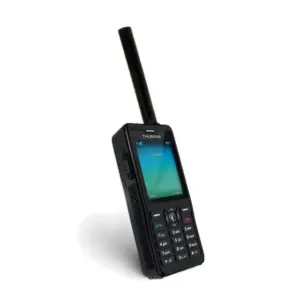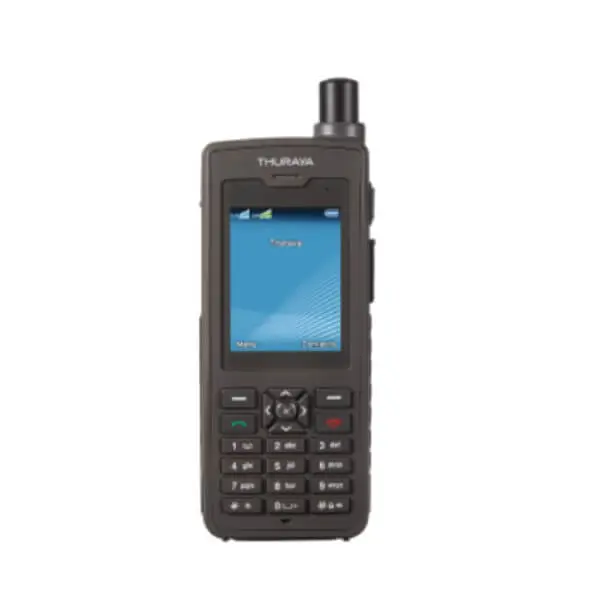
Thuraya XT-PRO DUAL Satellite Phone Dubai
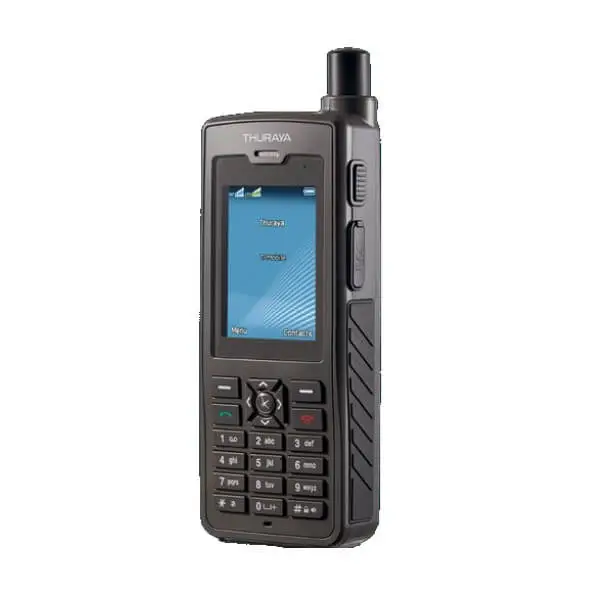
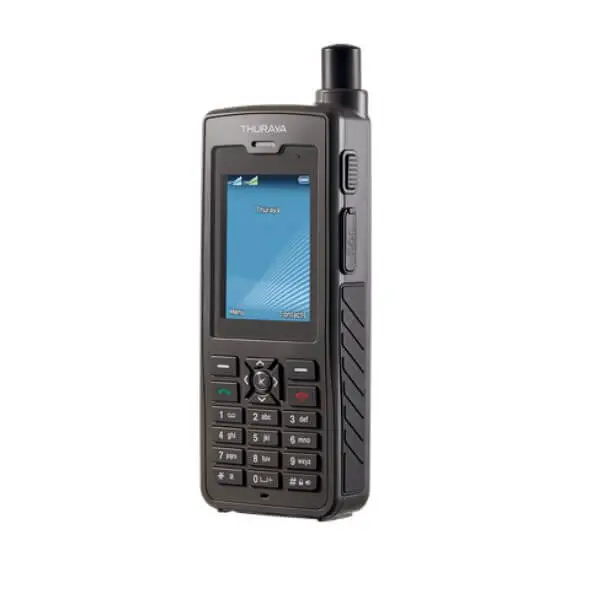
The Thuraya XT-PRO DUAL is built for people who move between normal cellular coverage and locations where terrestrial networks cannot be relied on. It combines Thuraya satellite communication with a separate cellular SIM path in one rugged handset, helping field teams, remote travellers, marine support crews, energy operations, logistics staff and emergency users stay reachable with fewer devices. Fourteck supports Dubai and UAE buyers with model selection, SIM and airtime planning, accessory matching, deployment preparation and quotation assistance based on the actual operating area rather than a generic box-sale approach.
Two network paths help users move between terrestrial coverage and remote satellite communication.
A satellite SIM and a cellular SIM can be used together for a practical dual-network workflow.
Manufacturer information lists up to 11 hours talk time and up to 100 hours standby, subject to use conditions.
GPS, BeiDou, GLONASS and Galileo support location, tracking and coordinate-sharing workflows.
Is the XT-PRO DUAL the right Thuraya phone for your requirement?
Choose the XT-PRO DUAL when one user genuinely needs both a satellite handset and a terrestrial cellular path during the same journey or operating cycle. That requirement is common for project managers driving from Dubai into remote work areas, field engineers moving between city and desert sites, logistics supervisors following long routes, marine-support teams leaving ports for offshore work, energy staff working beyond dependable mobile coverage, and emergency coordinators who want a second communication path outside ordinary cellular infrastructure.
The main reason to choose the DUAL model is not simply that it has more features. Its value comes from reducing the gap between two operating environments. Inside normal network coverage, the user can rely on the cellular SIM according to the supported bands, handset revision and local operator. Outside suitable terrestrial coverage, the user can switch to or remain reachable through the Thuraya satellite path, subject to service activation, network coverage and a usable view of the satellite.
If your requirement is only basic satellite voice and SMS, a simpler Thuraya handset may be more economical. If your requirement is full broadband for cloud applications, video meetings, Wi-Fi users, CCTV backhaul or large file transfer, a handheld satellite phone is not the correct primary internet solution. Fourteck helps separate these needs before quotation so the buyer is paying for the communication capability the project actually requires.
How dual-mode and dual-SIM operation helps Dubai field users
One handset for two coverage environments
A team member can use terrestrial service where appropriate and maintain a satellite communication option when work moves beyond dependable mobile coverage.
Two SIM slots
The device supports a dedicated satellite SIM slot and a cellular SIM slot, simplifying account separation for field teams and business users.
Always-On network behavior
Thuraya provides a SAT-and-cellular “Always On” mode designed to keep both network paths available when the required SIMs and services are configured correctly.
Simpler field handover
Companies can issue one rugged communication device rather than asking a user to manage separate satellite and terrestrial handsets during remote deployment.
Verified XT-PRO DUAL capabilities buyers should understand
| Capability | What it means in practice | Buying consideration |
|---|---|---|
| Satellite + cellular operation | A single handset can bridge Thuraya satellite service and supported terrestrial cellular service. | Confirm the exact cellular version, operator compatibility and destination before ordering. |
| Dual SIM | Separate satellite and cellular SIM paths provide flexible network use. | SIM type, account status, airtime and roaming arrangements should be checked before deployment. |
| Battery endurance | Up to 11 hours talk time and up to 100 hours standby are listed by Thuraya. | Actual runtime varies with signal, network mode, battery age, temperature and usage pattern. |
| GNSS navigation | GPS, BeiDou, GLONASS and Galileo provide multiple positioning choices. | Tracking and coordinate-sharing features should be configured and tested before field issue. |
| SOS function | A dedicated SOS button can trigger a pre-programmed call and/or message workflow. | Emergency contacts must be programmed and the procedure tested before relying on it. |
| Outdoor-readable display | Toughened Gorilla glass and an outdoor-oriented display support field readability. | Protective carrying and sensible handling are still recommended. |
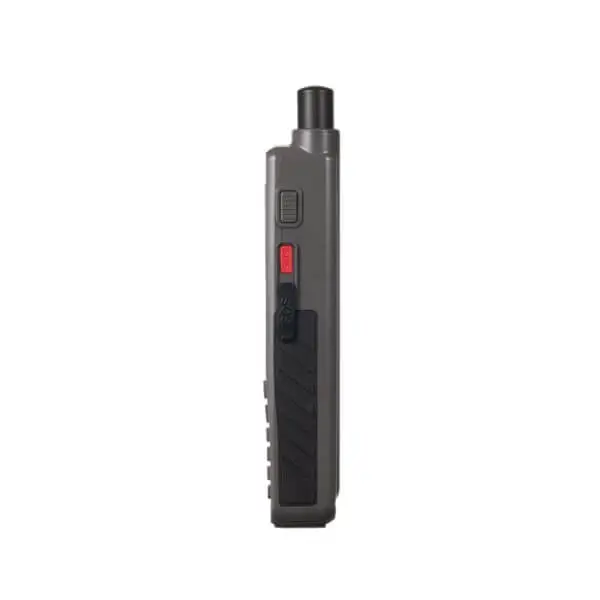
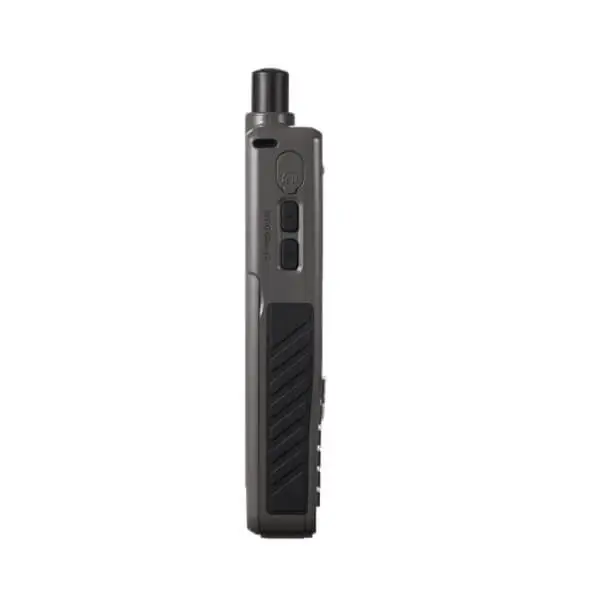
| Ruggedized body | The handset is designed to resist water, dust and impact in demanding environments. | Ruggedization does not remove the need for correct storage, charging and routine checks. |
| Satellite call notification | Incoming-call notification can alert the user even when the satellite signal is temporarily too weak to receive the call itself. | The user may still need to move to a better position and extend the antenna to complete communication. |
Satellite mode: what users should expect before leaving Dubai
Satellite communication behaves differently from a normal mobile phone. In satellite mode, the handset needs to register on the Thuraya network and obtain the information required for operation. The antenna should be fully extended and the user should have a direct, unobstructed view toward the satellite. High-rise buildings, enclosed structures, mountains, dense obstructions and some vehicle environments can reduce or block the satellite path. For this reason, a satellite phone is best treated as a field communication tool that needs correct positioning, not as a conventional indoor mobile handset.
A company buying the XT-PRO DUAL for emergency readiness should not leave it unopened until the day it is needed. The better approach is to activate the correct service, charge the battery, program important contacts, configure SOS settings, make a test call outdoors, verify the intended user understands the antenna and network modes, and establish a routine for checking airtime and battery condition.
For offices, vehicles or other environments where handheld outdoor use is inconvenient, compatible accessories may provide a better operating method. Fourteck can help the buyer decide whether a vehicle docking kit, external satellite antenna, indoor repeater, additional charger or spare battery is relevant to the intended deployment.
Dubai use cases for Thuraya XT-PRO DUAL
The most useful Dubai deployments are those where the user starts inside a well-connected urban environment and then moves into locations where cellular coverage may be uncertain, intermittent or operationally unsuitable. The DUAL model fits that transition particularly well.
Desert travel and remote routes
Useful for convoy leaders, tour support, site visitors and travellers who want a satellite voice and messaging option beyond dependable terrestrial coverage.
Construction and infrastructure
Project managers can use normal cellular service near developed areas and retain satellite capability for temporary sites, remote corridors and field inspections.
Energy and utilities
Field engineers, maintenance crews and supervisors may need an independent communication path when visiting remote facilities or working across large operating areas.
Marine and port support
A handheld satellite phone can serve as a supplementary voice and messaging option for suitable near-shore and regional use cases, subject to coverage and operating conditions.
Logistics and fleet supervision
Supervisors travelling between warehouses, highways, remote yards and project destinations can maintain more than one communication path with one device.
Emergency preparedness
Organizations can keep configured handsets as part of a continuity kit for selected staff, locations or vehicles where backup voice communication is important.
Navigation, tracking and SOS for field safety
The XT-PRO DUAL supports GPS, BeiDou, GLONASS and Galileo. That matters for teams that need to communicate coordinates, document movement or use location-based safety procedures in remote work. Thuraya also provides tracking options based on time, distance travelled and movement beyond a configured geofence. These functions are especially useful when the handset forms part of a broader lone-worker, convoy or field-supervision procedure.
The dedicated SOS button can initiate an emergency call and/or message to a pre-programmed number. This should be treated as a configured safety feature rather than a guarantee of rescue. The organization remains responsible for choosing the correct emergency contacts, keeping the SIM and service active, testing the process, training the user and making sure satellite conditions are suitable when the function is needed.
Record the handset user, satellite number, cellular number, airtime/service status, emergency contacts, SOS setup, charging accessories, last test-call date and next readiness check. For multiple handsets, a simple asset register prevents emergency equipment from becoming an untested drawer item.
Battery planning for desert, marine and remote projects
Thuraya lists up to 11 hours of talk time and up to 100 hours of standby for the XT-PRO DUAL. Those figures are useful for planning, but they are not a promise of identical runtime in every environment. Signal conditions, how often the handset searches for networks, cellular versus satellite use, call duration, tracking features, battery age, storage history and temperature all influence real-world endurance.
For a one-day site visit, a fully charged handset and vehicle charging option may be sufficient. For multi-day desert work, offshore activity or remote projects without stable mains power, buyers should consider whether a spare battery, car charger or solar charging option is appropriate. Critical teams should also define how often the phone is charged and tested rather than assuming standby time will cover an indefinite emergency period.
Fourteck can help structure a practical accessory package around the actual duty cycle. This avoids two common mistakes: under-buying when the phone must operate for long periods without power, and over-buying accessories that will not be used in the real deployment.
Data expectations: satellite phone versus satellite internet
The XT-PRO DUAL is primarily a communication handset. It supports satellite voice and messaging and can provide limited satellite data connectivity through Thuraya GmPRS when connected to a computer. That capability is useful for lightweight tasks, but it should not be confused with modern broadband performance. If a remote project needs cloud applications, multiple Wi-Fi users, large attachments, video collaboration, CCTV backhaul or general office internet, the buyer should evaluate a dedicated satellite broadband solution separately.
The cellular side can provide higher data capability when compatible terrestrial service is available, but the exact bands and performance depend on handset revision, operator support, local network conditions and service plan. For procurement, confirm the exact unit version rather than assuming every XT-PRO DUAL in the market has identical cellular specifications.
A practical remote-site design may use the XT-PRO DUAL as a personal or emergency voice path while a separate satellite internet terminal provides site data. These are complementary roles, not competing products.
XT-PRO DUAL accessories worth considering
| Accessory | When it is useful | Planning question |
|---|---|---|
| Vehicle docking kit | For vehicle-based users who need more convenient hands-free satellite communication. | Will the handset spend significant time assigned to a vehicle? |
| External satellite antenna | For suitable vehicle, boat or edge-of-coverage installations where antenna placement can improve practical use. | Is the user expected to operate while inside or around a vehicle? |
| Indoor repeater | For locations that need Thuraya service carried into a supported indoor environment. | Is regular indoor satellite usage part of the requirement? |
| Spare battery | For long field rotations, remote duty or emergency kits with limited charging. | How long can the team operate without dependable power? |
| Car charger | For logistics, field support and travel where vehicle power is available. | Is road time a major part of the duty cycle? |
| Solar charger | For selected remote deployments where mains power is unavailable. | Does the project need an off-grid charging option? |
| Protective carry solution | For sand, water, dust, transport and rough field handling. | How will the phone be stored when it is not in the user’s hand? |
Thuraya XT-PRO DUAL versus XT-PRO and general Thuraya choices
The XT-PRO DUAL should not be selected just because it sits above simpler models in a feature list. The best choice depends on whether dual-network operation is actually useful to the user.
| Option | Best fit | Why choose it | When another option may be better |
|---|---|---|---|
| XT-PRO DUAL | Users moving repeatedly between cellular and satellite coverage. | Dual-mode, dual-SIM, four GNSS options and long battery specification. | May be more capability than needed for satellite-only users. |
| XT-PRO | Professional satellite users who do not need dual terrestrial operation. | Rugged satellite calling, SOS, navigation and professional field design. | DUAL is stronger when one handset must cover both satellite and cellular roles. |
| XT-LITE | Users needing straightforward satellite voice and messaging. | Simpler buying path for basic communication requirements. | Professional navigation, advanced safety or dual-network needs may point elsewhere. |
| Thuraya model range | Buyers who have not yet chosen a model. | Lets the project start from requirement, budget and operating environment. | Use this XT-PRO DUAL page when the exact product is already the shortlist. |
When the XT-PRO DUAL is not the best fit
Do not choose it as a substitute for site broadband. A handheld satellite phone is designed around personal communication and safety, not as the main internet service for a team of laptops, phones, cameras and cloud applications.
Do not pay for dual-mode capability if you will only use satellite service. A satellite-only handset may meet the requirement more simply.
Do not assume indoor satellite performance. Satellite operation requires suitable signal conditions. Buildings, enclosed vehicles and obstructions can require the user to move outdoors or use purpose-matched accessories.
Do not assume every unit in the market has identical terrestrial specifications. Confirm the exact handset revision and supported cellular bands when cellular compatibility is important.
Do not treat SOS as a replacement for an emergency plan. The phone is one communication tool inside a larger safety process that includes contact procedures, service readiness, trained users and tested equipment.
SIM, airtime and service planning
The handset purchase is only one part of a usable satellite-phone deployment. The buyer must also decide how the satellite SIM will be provisioned, which airtime arrangement is appropriate, how often the phone is expected to call or message, whether the device is for regular operations or emergency standby, and what countries or regions it will be used in. Cellular service must be reviewed separately through the chosen terrestrial operator and the exact device version.
For corporate use, prepaid and postpaid decisions should be based on expected call volume, control requirements and how easily the organization needs to manage multiple users. Emergency standby phones need a process for checking account validity and airtime before a deployment. A fully charged phone with an inactive or expired service arrangement is not a ready emergency asset.
Thuraya states that its satellite network reaches more than 150 countries across Europe, Africa, Asia and Australia. Coverage should still be confirmed for the specific destination and operating plan before travel or project mobilization. Fourteck can structure the buying discussion around destination, number of users, usage pattern and required accessories before preparing the quote.
Dubai and UAE deployment planning
A Dubai buyer may use the same XT-PRO DUAL in very different environments, so the operating plan matters more than the purchase location. In Deira, Bur Dubai, Business Bay, Dubai Marina, Al Quoz, Dubai Investment Park, Jebel Ali or Dubai South, the phone may spend most of its time on terrestrial service before travelling to remote project areas. For desert tours, construction corridors, temporary camps or field maintenance, the satellite side becomes the key reason for carrying the handset.
Abu Dhabi and Al Ain users may require satellite communication for energy sites, desert roads, farms, remote infrastructure, security movements and offshore-support activities. Sharjah and Ajman buyers may use the handset for industrial field teams, marine support, transport, remote yards or travel safety. The device can support all of these use patterns, but accessories, airtime and user procedures should be matched to the real environment rather than copied from a generic package.
For organizations buying several units, Fourteck recommends standardizing the handover pack: handset ID, assigned user, satellite number, cellular number, charger set, spare battery if supplied, programmed emergency contacts, quick-use instructions, test-call date and next readiness-check date.
GCC and Africa project use from a Dubai procurement base
Many Fourteck enquiries originate in Dubai even when the equipment will be used across regional operations. For GCC projects, buyers may be planning desert routes, energy sites, construction work, logistics, emergency response, marine support or remote facilities in the UAE, Saudi Arabia, Oman, Kuwait, Qatar or Bahrain. The purchasing team should provide the destination and expected use pattern so coverage, service and accessories can be reviewed before shipment or handover.
Africa-linked buyers may be supporting NGOs, mining, energy, engineering, logistics, field research, remote clinics, conservation, media or emergency programs. Thuraya’s satellite footprint covers large parts of Africa, but the exact location should still be checked before relying on the handset. For teams moving between multiple countries, service management and charging strategy can be as important as the device itself.
The XT-PRO DUAL is especially relevant when a user will repeatedly move from normal mobile service into remote areas and wants one rugged device to cover both communication environments. If a team operates permanently outside terrestrial coverage, a satellite-only model may be sufficient; if the team needs broadband data, a separate satellite data solution should be included in the design.
Corporate procurement checklist for XT-PRO DUAL
List the countries, remote sites, travel corridors and typical indoor/outdoor environments.
Decide whether the main need is routine calling, emergency backup, SMS, tracking, dual-network convenience or all of these.
Identify the satellite service arrangement and the intended cellular operator or roaming plan.
Check whether mains, vehicle power, spare batteries or off-grid charging will be needed.
Select docking, external antenna, indoor repeater, chargers and protection only where justified.
Set test-call frequency, battery checks, emergency contacts, user handover and asset tracking.
Price and availability: what Fourteck needs for a useful quote
The XT-PRO DUAL price can vary with the exact handset version, quantity, SIM and service requirements, accessories, logistics and any deployment support requested. Fourteck does not need the customer to know every technical detail before asking for a quote, but a few inputs make the quotation much more useful: required quantity, destination, intended users, expected usage, project timeline, whether cellular operation is important, and whether vehicle or remote-power accessories are needed.
For buyers who are still comparing models, review the Thuraya Satellite Phone Price Dubai guide for the broader cost factors across the handset range. This XT-PRO DUAL page is intended to answer the product-specific question: whether the dual-mode, dual-SIM design fits your operational requirement.
Stock status, delivery timing and exact commercial terms should be confirmed at quotation stage rather than assumed from a web page.
Fourteck buying and deployment support
Fourteck supports buyers who need more than a model number. The discussion can cover use-case selection, comparison with the XT-PRO and other Thuraya handsets, satellite and cellular SIM planning, airtime requirements, accessories, charging, vehicle operation, emergency setup, deployment checklists and user handover. For corporate projects, the same process can be repeated across multiple handsets so users receive a consistent communication package.
Customers replacing an older dual-network Thuraya device can also review the Thuraya XT-Dual Replacement Dubai page. That page is focused on legacy XT-Dual replacement and upgrade decisions, while this page is dedicated to the current XT-PRO DUAL product and its dual-mode deployment.
To receive a relevant quote, share your destination, quantity, user type and whether the handset will be used mainly for routine field operations, emergency standby, vehicles, marine support or multi-country travel.
Thuraya XT-PRO DUAL Dubai FAQ
What is the main difference between XT-PRO DUAL and XT-PRO?
The XT-PRO DUAL adds dual-mode, dual-SIM operation so one handset can use Thuraya satellite service and a separate terrestrial cellular path. The XT-PRO is aimed at professional satellite-phone users who do not need the same dual-network arrangement.
Can the XT-PRO DUAL keep satellite and cellular service active together?
Thuraya provides a SAT-and-cellular “Always On” mode designed for dual-network availability when the required SIMs, compatible terrestrial service and satellite service are correctly configured.
Does satellite mode work inside buildings?
Direct handheld satellite operation generally needs an unobstructed view toward the satellite. Buildings and other obstructions can block or weaken the signal. Compatible indoor or external-antenna solutions may be considered for suitable fixed environments.
How long does the XT-PRO DUAL battery last?
Thuraya lists up to 11 hours of talk time and up to 100 hours of standby. Actual battery life depends on network conditions, usage, temperature, battery condition and enabled features.
Which navigation systems are supported?
The XT-PRO DUAL supports GPS, BeiDou, GLONASS and Galileo, giving field users several GNSS choices for location and tracking workflows.
Can the XT-PRO DUAL be used for internet access?
It can support limited satellite data through Thuraya GmPRS when connected to a computer, while the cellular side may offer higher data capability where compatible terrestrial service is available. It is not a substitute for dedicated satellite broadband when a site needs modern multi-user internet.
Is the SOS button ready to use immediately?
The SOS function should be configured with the correct emergency contact workflow and tested before field deployment. Organizations should include the handset inside a broader emergency plan rather than relying on an untested default setup.
Is the XT-PRO DUAL suitable for Dubai desert travel?
It can be a strong fit for remote desert communication because it provides a satellite path when terrestrial coverage is unavailable or unsuitable. Coverage, service status, antenna use, battery readiness and emergency contacts should be checked before travel.
Can Fourteck help with accessories and service planning?
Yes. Fourteck can discuss SIM and airtime needs, spare batteries, chargers, vehicle docking, external antennas, indoor solutions, deployment checklists and model comparison based on the actual project.
How do I request a Thuraya XT-PRO DUAL quote in Dubai?
Send Fourteck your required quantity, destination, expected usage, project timeline and any vehicle, charging or accessory requirements. The team can then prepare a requirement-based quotation and confirm current commercial availability.
Plan the XT-PRO DUAL around your real operating environment
Tell Fourteck where the handset will be used, who will carry it, how long the deployment lasts and whether the requirement is daily operations or emergency standby. We can help you compare the handset, service and accessory choices before you commit budget.