Fourteck • LEO Connectivity Guide • Dubai UAE
Starlink Low Earth Orbit Satellite Broadband Dubai
Starlink Low Earth Orbit Satellite Broadband Dubai is best understood as a connectivity technology decision, not simply a dish purchase. Starlink uses a large low Earth orbit, or LEO, satellite constellation to deliver broadband with much shorter signal travel distance than traditional geostationary satellite systems. For Dubai and UAE customers, that can make satellite broadband practical for interactive work, remote operations, temporary locations, resilient backup links and sites where terrestrial connectivity is difficult, delayed or operationally inconvenient. The result still depends on the service plan, service-address capacity, terminal choice, clear-sky visibility, installation quality, power, local Wi-Fi or LAN design and network demand.
Starlink describes its satellites as orbiting much closer to Earth than traditional geostationary systems.
TDRA granted Starlink Satellite Communications LLC a 10-year General Space Services License on 28 August 2026.
Obstructions can interrupt connectivity as the terminal tracks satellites moving across the visible sky.
Hardware, plan, mounting, network integration and backup design should follow the real site requirement.
What Does Low Earth Orbit Satellite Broadband Mean?
Low Earth orbit satellite broadband uses spacecraft that travel far closer to Earth than traditional geostationary communications satellites. A geostationary satellite appears fixed above one point on the equator at roughly 35,786 kilometres altitude. That geometry is useful because a fixed dish can point toward one known position, but the long signal path creates substantial propagation delay. Starlink takes a different approach: thousands of satellites move across the sky in lower orbits, with Starlink describing its operating altitude as about 550 kilometres. The user terminal electronically tracks available satellites and the network manages hand-offs as one spacecraft moves out of view and another becomes usable.
The shorter path can make the connection feel much more responsive than older high-orbit satellite broadband. Starlink’s technology material uses an illustrative comparison of roughly 25 milliseconds for its low-orbit architecture versus 600 milliseconds or more for traditional geostationary paths. That comparison explains the technology advantage; it should not be treated as a promise for every Dubai connection. Real application latency also includes routing through Starlink gateways, internet exchange points, destination servers, congestion, Wi-Fi conditions and any firewall or VPN processing at the customer site.
For customers, this difference matters because delay affects interactive applications. Email and basic browsing can tolerate high latency, but video meetings, cloud desktops, voice services, remote administration, transaction systems and many operational platforms respond better when round-trip delay is lower and more consistent. This is why LEO broadband has moved satellite connectivity beyond a purely last-resort role and into business-continuity, rapid-deployment and remote-site designs.
| Design factor | LEO broadband | Traditional GEO broadband | Why the buyer cares |
|---|---|---|---|
| Satellite distance | Hundreds to low thousands of kilometres; Starlink describes about 550 km | About 35,786 km for geostationary orbit | Shorter distance can reduce propagation delay. |
| Satellite movement | Satellites move across the user’s sky view | Satellite appears fixed from Earth | LEO terminals and networks must manage tracking and hand-offs. |
| Latency character | Generally lower and more suitable for interactive applications | Higher because of long signal travel | Video, voice and cloud workflows can feel more responsive over LEO. |
| Sky requirement | Broad unobstructed sky view is important | Clear line of sight toward a known orbital position | Mounting location and surrounding structures directly influence reliability. |
What Changed for Starlink in the UAE in 2026?
The regulatory context changed significantly in 2026. On 28 August 2026, the UAE Telecommunications and Digital Government Regulatory Authority announced that it had granted Starlink Satellite Communications LLC a 10-year General Space Services License. TDRA stated that the license authorizes the company to establish, operate and manage a public satellite communications network and provide broadband satellite internet services in the United Arab Emirates. This is more useful to a buyer than older web pages that still describe Starlink in the UAE as merely expected, unofficial or unavailable.
The license does not remove the need to check the exact service address, capacity, plan rules or hardware options before ordering. Satellite capacity is managed geographically and commercial offerings can change. Some areas may accept orders immediately while others may have capacity constraints, different plan choices or changing hardware availability. Fourteck therefore recommends confirming the current service status for the intended address rather than assuming that a nationwide regulatory license means every plan and every hardware model is instantly orderable at every location.
Official references: Review the TDRA Starlink licensing announcement for the UAE regulatory decision and the Starlink UAE business service-plan page for current operator plan information. These official sources should take precedence over old reseller pages, cached pricing or historical availability claims.
Fourteck does not treat a cached price, old kit name or third-party stock claim as proof of current UAE availability. Confirm the current service class, terminal and ordering status for the project before procurement.
Where Starlink LEO Broadband Fits in Dubai
Dubai has excellent terrestrial telecom infrastructure, so Starlink should not automatically be positioned as a replacement for fibre. In a well-served office tower, data centre or modern villa community, fibre can offer very high capacity, consistent service and established local support. The stronger Starlink use cases usually appear when the customer values path diversity, rapid deployment, independence from the same local ducts or towers, connectivity at a hard-to-reach site, or a secondary WAN that uses a fundamentally different access technology.
A construction project waiting for permanent fibre may need a working link quickly. A warehouse or logistics yard may want a second path that does not share the same local last-mile failure domain as its primary circuit. A desert camp or remote facility may have weak mobile coverage. A temporary project office may need an internet path that can be deployed without civil work. A villa may use Starlink where roof access and sky visibility are good but terrestrial service is unsuitable for the owner’s requirement. These are requirement-led decisions rather than a simple question of which connection has the largest advertised speed number.
| Requirement | Starlink LEO fit | Planning note |
|---|---|---|
| Remote or difficult last mile | Strong candidate | Verify service address, power, clear sky and mounting access. |
| Temporary project site | Often useful | Plan safe temporary mounting, cable protection and equipment security. |
| Business backup WAN | Useful when designed correctly | Use firewall or SD-WAN failover, health checks and application priorities. |
| Well-served high-capacity office | Usually complementary | Fibre may remain the stronger primary link; Starlink can add diversity. |
| Moving vehicle, marine or aviation | Separate specialist decision | Validate permitted in-motion use, approved hardware and applicable plan. |
Performance: What the Numbers Do and Do Not Tell You
Starlink publishes expected performance ranges by service class, but those figures are not a fixed-speed guarantee for a particular Dubai address. The operator explicitly notes that performance varies with location, time of day, plan priority, network demand and service conditions. Installation also matters: a good satellite link can still produce a poor user experience if the terminal is obstructed, the indoor Wi-Fi is weak, the local switch is overloaded, the firewall is undersized or a VPN sends traffic through a distant gateway.
The practical question is therefore not “What is the maximum Starlink speed?” but “What applications, user count and availability objective does this site have?” A five-user project cabin using email, cloud files and Teams is different from a large accommodation camp with hundreds of devices. A CCTV backhaul requirement behaves differently from interactive office work. A backup link may be sized for critical services only rather than every application the business runs on its primary fibre connection.
Latency should be interpreted in the same way. LEO architecture reduces the satellite-distance component, which is why Starlink can support interactive services far better than older high-latency satellite designs. However, a business application hosted in another region, an overloaded VPN concentrator or poor local Wi-Fi can add far more delay than the satellite segment itself. For a serious project, test the full user path rather than relying on one public speed-test screenshot.
Clear-Sky Visibility Is Part of the Network Design
A Starlink terminal does not simply point toward one fixed satellite. It needs a wide view of the sky because satellites move through the terminal’s field of view and the network hands traffic between them. Starlink’s own business installation guidance states that the terminal should be unobstructed for best performance and recommends using the obstruction tool in the Starlink app before permanent mounting. Even small obstructions can produce intermittent interruptions when a satellite passes behind the blocked part of the sky.
In Dubai, common obstruction problems include high-rise parapet walls, neighbouring towers, rooftop plant rooms, water tanks, elevator structures, signage, architectural screens and metal shade systems. A location that looks “open” from standing height may still be poor for the terminal because one direction is heavily blocked. Villas present a different challenge: trees, pergolas, solar structures, adjacent buildings and decorative roof elements can reduce the usable sky. Industrial sites may have cranes, stacks, warehouses or moving equipment that intermittently crosses the field of view.
This is why roof access and mounting permission can be more important than the kit choice in dense areas. A buyer should confirm who controls the roof, whether penetrations are allowed, how the cable will enter the building, what safety rules apply, and whether the terminal can be reached later for inspection. If the only possible mounting point is badly obstructed, Starlink may not be the right primary solution for that site.
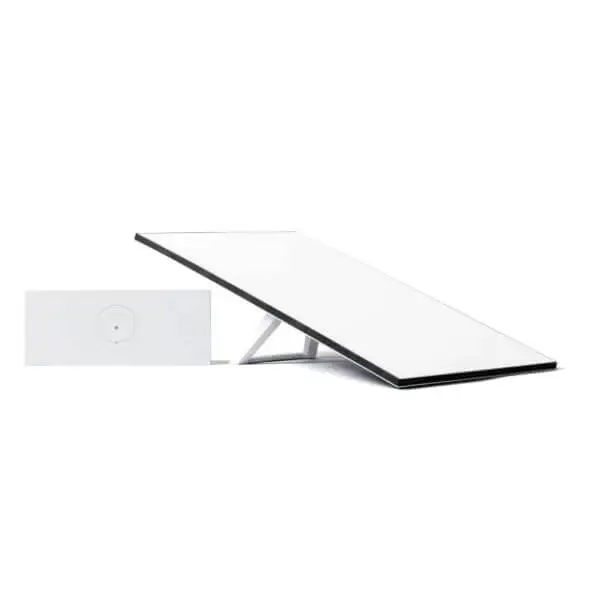
Fourteck media-library illustration of a Starlink terminal for Dubai. Hardware generations and kit contents change; confirm the current operator-supplied model before procurement.
Choosing a Hardware Direction Without Buying by Model Name Alone
Starlink hardware evolves. Buyers often arrive with an old model name copied from a marketplace listing or an earlier project, but the more reliable approach is to select hardware from the application backward. Current Starlink documentation describes several hardware families for different usage patterns, including Standard, Mini, Enterprise and Performance variants. Availability differs by country and account, so a model seen in one market should not be assumed to be the current UAE option.
Standard direction
A common fixed-site choice for everyday internet requirements where a conventional powered installation, suitable mount and local Wi-Fi or Ethernet design are available. Confirm the current Standard generation, router and cable package for the UAE account.
Mini direction
Useful where compact size and lower power are more important than maximum site capacity. It can suit portable or smaller requirements, but service-plan rules and permitted use still need to be checked for the intended location and movement pattern.
Performance direction
Designed for more demanding business, remote and environmental applications. Starlink’s current Performance documentation emphasizes resilience, wider operating conditions, third-party router compatibility and advanced power options. Match those benefits to the project rather than buying the premium terminal by default.
For an IT manager, the terminal is only one line item. The project may also require mounting hardware, cable-route protection, surge or power protection, UPS capacity, Ethernet handoff, router or firewall interfaces, switches, access points, rack space and monitoring. A “cheap kit” can become an expensive mistake if the site later needs structural changes or duplicate networking equipment because the original requirement was not defined.
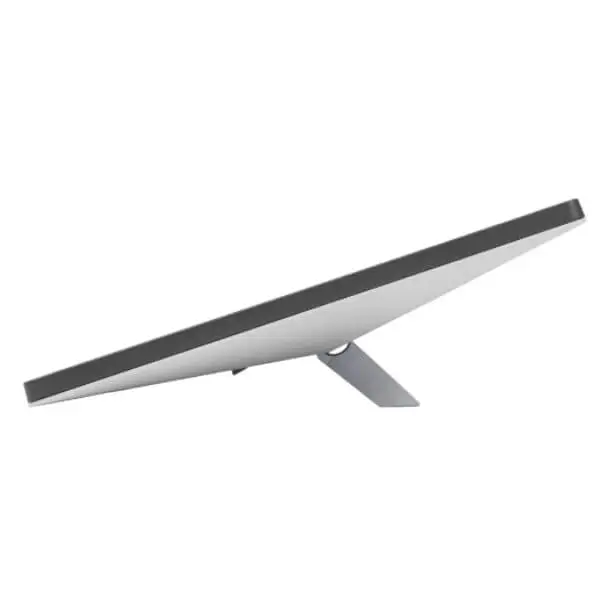
Starlink Mini example from the Fourteck media library. Compact hardware can simplify some deployments, but plan eligibility, power, user load and intended mobility should be validated first.
Service Plan Selection Is a Technical Decision Too
The service plan affects more than the monthly bill. Starlink uses different plan classes for fixed, priority and mobility scenarios, with different data treatment, network precedence, geographic permissions and support features. The UAE business site currently presents Local Priority and Global Priority choices, but plan names and commercial terms can change. A fixed Dubai office should not automatically buy a mobility-focused plan, and a project that expects cross-border, maritime or in-motion use should not assume that a fixed service plan permits those activities.
For backup connectivity, priority data may be valuable when the link is expected to carry critical applications during a primary outage. For a smaller office or temporary cabin, a different plan may be sufficient. For marine, aviation and land-mobility requirements, use the operator’s current eligibility information and approved hardware guidance. Mobility rules can be country-specific, so a system that functions technically does not automatically mean it is permitted under every plan or jurisdiction.
Fourteck’s role in planning is to help convert the customer requirement into questions the operator plan must answer: Is the site fixed? Will the terminal move? Is usage only inside the UAE? Is public addressing required? How much priority data is needed? Is the link primary or backup? What applications must continue during failover? These questions are more durable than copying a plan name from an old quotation.
Network Integration: The Satellite Link Is Only the WAN
Starlink supplies internet access, but the user experience inside a business still depends on the LAN. A warehouse with metal racking, a multi-floor villa, a large construction compound or a hotel cannot assume that one bundled Wi-Fi router will cover every user. The right design may use Ethernet distribution, PoE switches, centrally managed access points, outdoor Wi-Fi, VLANs and separate staff, guest, CCTV and IoT networks.
Businesses may also connect Starlink to an existing firewall or SD-WAN appliance. The firewall can perform policy routing, WAN health checks, automatic failover, application control, VPN termination and security inspection. However, failover must be tested with the applications that matter. A router can declare a WAN “up” while the application path is unusable, and some cloud or VPN sessions may need to reconnect when the public path changes. Design health checks around real business objectives rather than only a ping test.
Addressing requirements also matter. Starlink’s business documentation describes public IP availability with Priority services, but a customer should confirm the current plan and addressing behaviour before designing inbound services. Many modern applications work well through outbound sessions and cloud brokers, while legacy systems may expect a stable publicly reachable address. Where remote access is needed, a secure VPN, zero-trust gateway or managed cloud path may be preferable to directly exposing devices to the internet.
A practical business topology
Starlink Terminal → Starlink Power / Ethernet Handoff → Firewall or SD-WAN → Managed Switch → Wi-Fi / Office LAN / CCTV / IoT / Voice
For resilience, the firewall can also retain fibre, 5G or another WAN. Policy can keep normal traffic on the primary circuit and move selected services to Starlink during failure, or distribute traffic across multiple links where the design supports it.
Starlink as Backup Internet in Dubai
One of the strongest business cases for LEO satellite broadband in Dubai is path diversity. Two terrestrial circuits can still share ducts, exchanges, building risers or upstream infrastructure. A satellite path reaches the site differently, which can reduce dependence on the same last-mile physical route. That does not create absolute independence—Starlink still depends on power, the terminal, satellite capacity, gateways and internet infrastructure—but it changes the failure domain enough to be valuable for many continuity plans.
A serious backup design should define what happens during failure. Should all users move to Starlink, or only critical departments? Should cloud backup traffic pause? Should guest Wi-Fi be disabled? Should CCTV uploads be rate-limited? Should voice and Teams receive priority? Is the UPS large enough to power the terminal, firewall, switches and access points for the required outage duration? These operational decisions determine whether the backup link actually protects the business.
For a dedicated business-backup buying guide, see Fourteck’s Starlink Business Backup Internet Dubai page. This LEO page remains focused on the underlying technology and design principles rather than duplicating that service-specific intent.
Dubai Site Conditions to Check Before Ordering
Roof and landlord access
Confirm that the intended mounting area is legally and physically accessible, that the building permits the installation method and that maintenance access will remain available.
Heat and sun exposure
Use operator-rated hardware within its environmental limits and avoid improvising enclosures that trap heat or interfere with the terminal’s view of the sky.
Dust and cable protection
Protect routes from abrasion, sharp bends, uncontrolled roof traffic and water entry points. Do not assume an outdoor-rated terminal makes every connector and indoor network component suitable for exposed mounting.
Power quality
Remote projects may need UPS, generator or DC power planning. Back up the complete network path, not only the satellite terminal.
Indoor Wi-Fi
Concrete, glass, metal and large floor areas can limit wireless coverage. Plan access points based on the building, not only on the Starlink router specification.
Security
Outdoor equipment, exposed cables and temporary project sites may need anti-tamper measures, protected power and controlled network access.
Customer Scenarios Across Dubai
Jebel Ali, Dubai Investment Park and logistics sites: these environments often need connectivity across warehouses, yards, site offices and temporary expansions. LEO broadband can be evaluated as a rapid-deployment or backup WAN, but local distribution usually requires managed switching, access points and firewall policy. Roof obstructions, steel structures and long cable routes should be checked during survey.
Dubai South, construction and temporary project zones: the project timeline can make rapid deployment more valuable than the theoretical maximum capacity of a permanent circuit. Starlink can provide a useful bridge while fixed infrastructure is pending, provided the site has stable power, safe mounting and adequate sky visibility. As the project grows, the network can be redesigned around the permanent link while retaining Starlink as a secondary path where appropriate.
Villas and low-rise properties: rooftop access may be easier than in high-rise towers, but indoor coverage is often the real challenge. Multi-floor homes can need additional access points or mesh nodes. The terminal should not be placed only where cabling is convenient; the first priority is a suitable sky view, followed by safe cable entry and good indoor distribution.
Business Bay, Downtown, Marina and dense high-rise locations: the main limitation may be roof access and surrounding towers rather than service technology. A tenant should verify building permission and obstruction conditions before buying hardware. Where the terminal cannot obtain the required sky view, a strong fibre connection or alternative backup arrangement may be the better decision.
Desert operations, farms and remote UAE sites: LEO satellite broadband becomes more compelling when terrestrial options are limited. However, remote deployment adds power, equipment security, mounting, heat exposure and maintenance-access questions. The internet link may be excellent while the local site still fails because a generator stops, a cable is damaged or an access point cannot cover the required area.
Abu Dhabi, Sharjah, Ajman and Wider UAE Requirements
The same LEO principles apply across the UAE, but the operational context changes. Abu Dhabi projects can include remote energy, industrial, farm, logistics and desert environments where power continuity and rugged network design matter. Sharjah can combine dense urban sites with industrial areas and east-coast locations, creating very different obstruction and backhaul requirements. Ajman and the Northern Emirates can include villas, warehouses, farms, coastal businesses and mountain or remote hospitality projects.
A customer should therefore avoid copying one Dubai deployment into another emirate without survey. The service address must be validated, the local installation environment should be reviewed, and the network architecture should follow user count and application demand. For country-level product and regulatory context, see Starlink UAE.
LEO vs Fibre, 5G and Other Satellite Options
There is no universal “best” access technology. Fibre is excellent when the site already has a reliable high-capacity circuit and the customer wants maximum predictable terrestrial bandwidth. 5G can be fast to deploy where mobile coverage and indoor radio conditions are strong. LEO satellite is valuable when the customer needs a path that is not tied to the same local terrestrial infrastructure, wants connectivity at a difficult site or needs deployment where fixed-line lead time is the main problem. Managed GEO or VSAT services can still make sense for specialised coverage, contracted enterprise designs, particular maritime requirements or environments where the service model matters more than interactive latency.
| Option | Typical strength | Main limitation to check | Good planning role |
|---|---|---|---|
| Fibre | High capacity and stable fixed connectivity | Availability, lead time and shared terrestrial route | Primary WAN where strong fixed service exists |
| 5G / fixed wireless | Quick deployment with no rooftop satellite terminal | Signal, cell loading, indoor penetration and data policies | Primary or backup where radio conditions are strong |
| Starlink LEO | Lower-latency satellite path and rapid site reach | Sky visibility, capacity, service plan and environmental setup | Remote access, rapid deployment or path-diverse backup |
| Managed GEO / VSAT | Established managed satellite-service models and broad coverage options | Higher latency and specialised equipment/service design | Specialist enterprise, remote, maritime or contracted coverage needs |
For a broader multi-provider comparison, Fourteck maintains a separate Best Satellite Internet Dubai decision guide. Keeping technology comparison on that page helps this LEO page concentrate on how Starlink’s low-orbit architecture affects design and deployment.
A Practical Site-Survey Workflow
- Confirm the service address and use case. Identify whether the connection is primary, backup, temporary, remote, mobile or specialist before choosing a kit.
- Check sky visibility. Use the Starlink app obstruction tool at realistic mounting positions, not only from ground level.
- Review mounting permission and safety. Confirm roof access, landlord or facility approval, wind exposure, service access and suitable mounting method.
- Plan the cable path. Determine entry point, cable protection, maximum practical route, waterproofing and internal handoff location.
- Plan power. Check the supply, UPS requirement, generator or DC options and the full network load that must remain available.
- Design the LAN and Wi-Fi. Decide whether the site needs only the Starlink router or a managed firewall, switches and additional access points.
- Define security and failover policy. Specify application priorities, VPN requirements, public IP needs, guest access, CCTV and monitoring.
- Commission with real applications. Test browsing, cloud services, voice/video, VPN and failover behaviour instead of accepting one speed test as proof of readiness.
For customers whose main intent is installation rather than LEO technology, see Starlink Dubai Supply and Installation. That page covers deployment scope in more detail without turning this technology guide into a duplicate installation page.
Common LEO Broadband Buying Mistakes
What to Send Fourteck for a Useful Recommendation
A good quotation starts with project information, not just the words “Starlink price.” Share the site location, building or project type, whether the connection is primary or backup, approximate user count, important applications, expected CCTV or IoT traffic, roof or open-area access, available power, need for UPS, existing firewall or router model, number of buildings or floors and whether the terminal will remain fixed. For a backup design, include the current primary internet type and the applications that must continue during an outage.
With that information, Fourteck can help narrow the terminal direction, plan questions, mounting and cable requirements, LAN/Wi-Fi scope and integration tasks before a formal commercial discussion. Service eligibility, operator plan availability, terminal availability and final performance remain subject to current Starlink information and the actual site.
Frequently Asked Questions
What is Starlink Low Earth Orbit Satellite Broadband Dubai?
It is Starlink’s LEO satellite internet service considered in a Dubai deployment context. The technology uses satellites much closer to Earth than traditional geostationary systems, helping reduce propagation delay and making satellite broadband more suitable for interactive internet applications.
Is Starlink licensed to provide satellite internet in the UAE?
Yes. On 28 August 2026, the UAE TDRA announced a 10-year General Space Services License for Starlink Satellite Communications LLC to operate a public satellite communications network and provide broadband satellite internet services in the UAE. Exact service-address capacity and plan availability should still be checked before ordering.
Why can LEO satellite internet have lower latency than GEO satellite internet?
The satellites are far closer to Earth, so the radio signal has a much shorter distance to travel. End-to-end latency still depends on gateways, internet routing, congestion, Wi-Fi and the destination application.
Does Starlink need a clear view of the sky in Dubai?
Yes. Starlink requires broad sky visibility because its satellites move overhead. Parapet walls, towers, rooftop plant, trees or other obstructions can cause interruptions. Check the intended mounting point with the Starlink app obstruction tool before permanent installation.
Is Starlink faster than fibre in Dubai?
Not automatically. High-quality fibre can provide greater capacity and excellent consistency where it is available. Starlink’s advantage is different: it can reach locations without the same local terrestrial last mile and can add path diversity, rapid deployment or remote-site connectivity.
Can Starlink be used as a backup internet connection for a Dubai office?
Yes, when the service, hardware and network design suit the requirement. A firewall or SD-WAN platform can monitor the primary WAN and move selected traffic to Starlink during failure. The failover policy and power backup should be tested before the business depends on it.
Which Starlink hardware should I choose?
Choose from the use case rather than an old model name. Standard, Mini, Enterprise and Performance hardware address different needs. Confirm what Starlink currently offers for the UAE and match the terminal to fixed or portable use, user demand, environmental conditions, power and network integration.
Can Starlink work with an existing firewall and access points?
Many business deployments integrate Starlink with third-party routing, firewall, switching and Wi-Fi systems. The exact handoff and addressing design depend on the hardware and plan, so compatibility should be reviewed before procurement.
Can I use the same Starlink setup for fixed, mobile, marine and aviation use?
Do not assume so. In-motion, maritime and aviation use have separate hardware, plan and regulatory considerations. Confirm operator eligibility and permitted use for the exact scenario before deployment.
What affects real Starlink performance in Dubai?
Important factors include service plan, network load, service-address capacity, sky obstructions, weather, terminal installation, local Wi-Fi, firewall or VPN processing and the destination application. Performance should be evaluated as an end-to-end service rather than only a satellite speed number.
Can Fourteck help plan the complete LEO broadband deployment?
Fourteck can help customers define the requirement, review site conditions, select a hardware direction, plan mounting and cabling, design LAN/Wi-Fi and firewall integration, and prepare a quotation scope. Current service eligibility and plan availability should be confirmed against Starlink’s live information.
Related Fourteck Starlink Resources
Starlink Fixed Site Internet Dubai
Starlink Business Backup Internet Dubai
Starlink Dubai Supply & Installation
Starlink Mini Dubai
Starlink Internet Plans Dubai
Plan the LEO Link Around the Real Requirement
If you are evaluating Starlink Low Earth Orbit Satellite Broadband Dubai, send Fourteck the location, user count, primary or backup objective, key applications, mounting access and existing network details. Fourteck can help turn those inputs into a practical hardware, plan, installation and network-integration scope without relying on unsupported speed, stock or availability assumptions.