Starlink Mini Kit Dubai
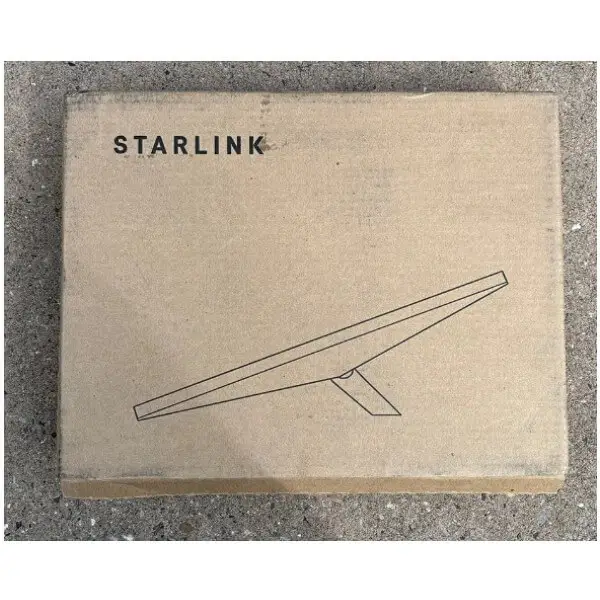
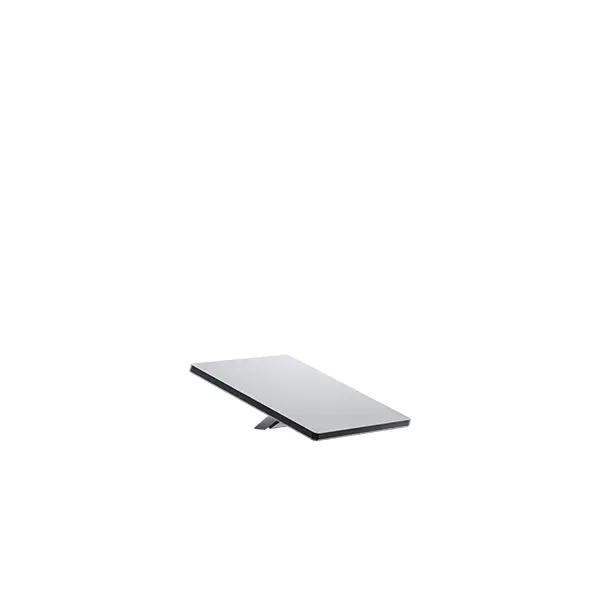
Starlink Mini Kit Dubai is a compact Starlink hardware option built around a small electronic phased-array terminal with integrated Wi-Fi, a low average power requirement and a portable form factor. For a Dubai buyer, however, the important decision is not simply whether the hardware is small enough to carry. The purchase should match the intended Starlink service plan, current UAE eligibility, power source, mounting method, Ethernet requirement and operating environment. Fourteck can help customers evaluate the kit as a procurement item, confirm what is included, identify the accessories that may still be required and separate the hardware decision from installation, network design and service-plan questions.
This page focuses on the Starlink Mini Kit as a product and buying decision. For detailed deployment planning, indoor Wi-Fi design, firewall integration and site-specific implementation, see the separate Starlink Mini Dubai planning guide.
Request a Procurement Review
Check UAE Price & Availability Context
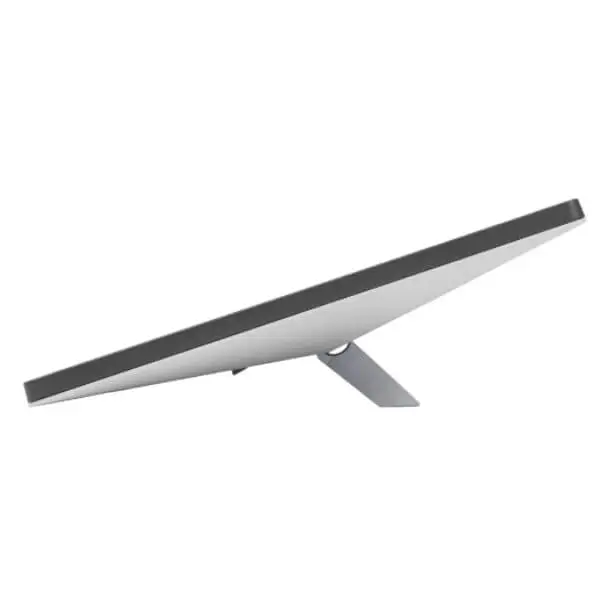
Compact dimensions support transport, field kits and installations where equipment footprint matters.
Official Starlink figure for the terminal alone; the total increases with the kickstand and cable.
A key reason buyers consider Mini for portable, battery-supported and remote deployments.
The Mini includes integrated dual-band Wi-Fi and one latching Ethernet LAN port.
UAE availability must be checked separately from the hardware specification
The UAE Telecommunications and Digital Government Regulatory Authority granted Starlink Satellite Communications LLC a 10-year General Space Services License in August 2026, authorising satellite broadband services in the UAE. That regulatory development is important, but it should not be treated as automatic proof that every Starlink hardware model, service plan or mobility mode is available to every Dubai customer.
Starlink maintains a separate public list of countries where Mini is available to purchase. At the time this content was reviewed, the UAE was not shown on that Mini-specific purchase list. Because Starlink availability and plan rules can change, Fourteck recommends confirming the current Mini hardware route, account eligibility, service address, supported plan and intended usage before a purchase decision. This is especially important for portable, roaming, in-motion, cross-border or business-critical use.
Practical buying rule: verify both the hardware and the service. A technically compatible kit is useful only when the active Starlink service and regional rules support the intended deployment.
What is included in the Starlink Mini Kit?
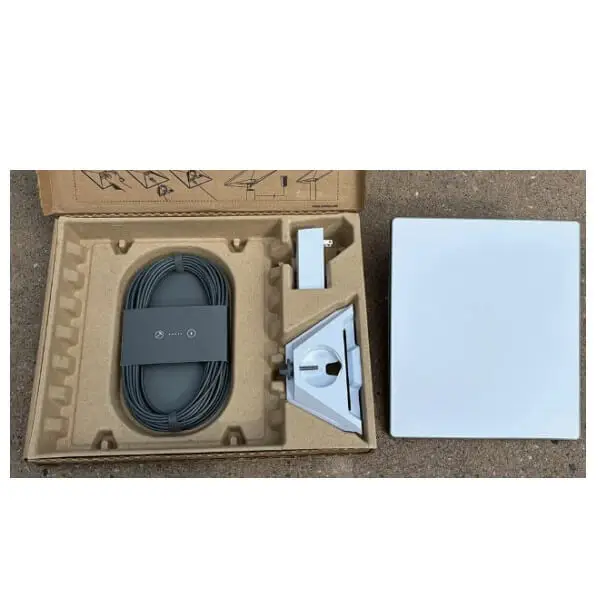
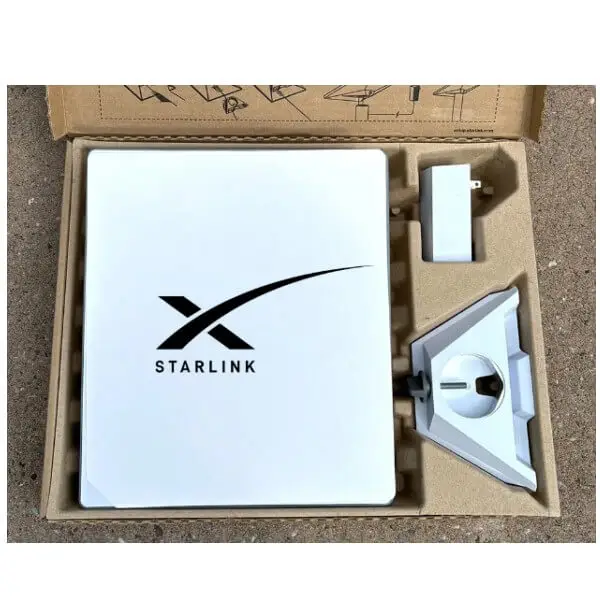
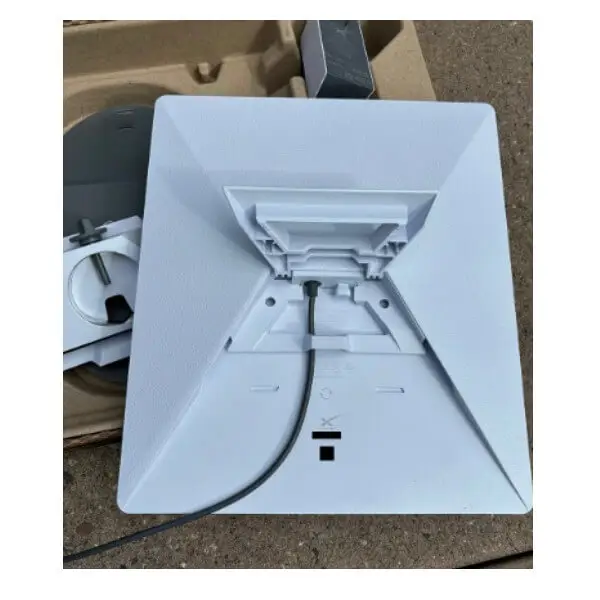
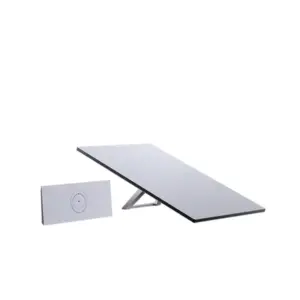
Starlink’s published Mini Kit contents include the Starlink Mini terminal with integrated Wi-Fi, a kickstand, Mini pipe adapter and flat mount, 15 m DC power cable, power supply and Starlink plug. The published package weight is approximately 2.72 kg. Those details are useful when a customer is planning transport, storage, field deployment or a project handover.
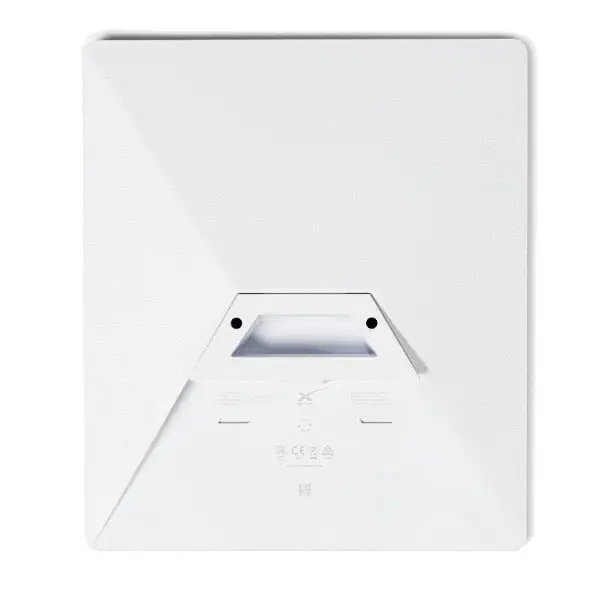
Starlink Mini terminal
Electronic phased-array antenna with integrated Wi-Fi, reducing the number of separate devices required for a basic deployment.
Kickstand
Useful for suitable temporary placements and fast supervised setup where the terminal can maintain a clear sky view.
Pipe adapter and flat mount
Included mounting components provide options for compatible surfaces or pipe arrangements, subject to the real site and structural requirements.
15 m DC power cable
The cable helps separate the terminal location from the indoor or protected power point while keeping within the manufacturer’s intended connection method.
Power supply
The supplied power source provides the simplest supported starting point for ordinary AC-powered use.
Starlink plug
The correct connection arrangement matters because the Mini’s environmental rating is conditional on using the specified plug or cable configuration.
Kit contents can be revised by the manufacturer, and regional bundles can differ. Fourteck therefore recommends confirming the current box contents before quotation or procurement instead of assuming every optional cable, travel case, mobility mount, roof mount, extra router or network accessory is included.
Verified Starlink Mini hardware specifications
The following values come from the current official Starlink Mini specification sheet. They describe the hardware platform; they do not guarantee broadband speed, service coverage, activation or performance at a particular Dubai address.
| Specification | Published Mini detail | Buyer significance |
|---|---|---|
| Antenna | Electronic phased array | Enables the compact electronically steered Starlink terminal format. |
| Field of view | 110° | The terminal still needs a useful unobstructed view of the sky. |
| Orientation | Software-assisted manual orienting | Placement and alignment remain part of the setup process. |
| Dimensions | 298.5 × 259 × 38.5 mm | Important for cases, mounting areas, mobile kits and storage planning. |
| Weight | 1.10 kg terminal; 1.16 kg with kickstand; 1.53 kg with kickstand and 15 m cable | Helps buyers estimate practical portability rather than looking only at terminal weight. |
| Environmental rating | IP67 Type 4 with specified cable/plug installed | Weather resistance depends on preserving the approved connection arrangement. |
| Operating temperature | -30°C to 50°C | Dubai buyers should still account for direct sun, hot rooftops and real installation conditions. |
| Operational wind | 96 kph+ published rating | The mounting structure and fixing method remain separate engineering considerations. |
| Average power | 25–40 W | Relevant to UPS, battery, portable-power and solar calculations. |
| Input rating | 12–48 V, 60 W | Creates useful DC-power flexibility when a supported design is used. |
| USB PD requirement | 100 W, 20 V/5 A minimum with Starlink USB-C-to-Barrel-Jack accessory | A common low-power USB-C charger should not be assumed to be suitable. |
| Wi-Fi | 802.11a/b/g/n/ac, Wi-Fi 5, dual-band 3×3 MU-MIMO | Provides a self-contained wireless option for compact deployments. |
| Ethernet | One latching Ethernet LAN port with Starlink plug | Supports a wired handoff when the correct Starlink-compatible cable arrangement is used. |
| Published Wi-Fi coverage | Up to 112 m² | Actual indoor coverage varies with walls, metal, distance, interference and placement. |
| Device capacity | Up to 128 connected devices | A connection limit is not the same as a recommendation for high simultaneous business load. |
Who should consider the Starlink Mini Kit?
The Mini is most attractive when the hardware decision is driven by portability, compact storage, lower power demand or a requirement to deploy a self-contained Starlink terminal quickly. That can include field engineering teams, temporary project offices, survey crews, remote maintenance groups, portable backup kits, supervised events, small remote facilities and selected off-grid operations. The hardware can also be relevant when a customer wants to keep the terminal separate from the indoor network and hand the connection off by Ethernet.
| Requirement | Why Mini may fit | What still needs confirmation |
|---|---|---|
| Portable field kit | Small terminal, integrated Wi-Fi and relatively low power demand. | Current plan eligibility, power, mounting and sky view at each location. |
| Temporary project office | Fast hardware deployment without waiting for a permanent terrestrial circuit. | User load, indoor Wi-Fi, Ethernet distribution and service availability. |
| Backup connectivity kit | Compact unit can be stored and deployed when an alternate path is required. | Firewall design, failover policy, account status and power readiness. |
| Off-grid or battery-supported site | 25–40 W average draw is useful compared with larger terminal classes. | Battery reserve, cable loss, conversion efficiency and other network loads. |
| Large permanent office | Mini may still be useful as a secondary path. | Whether a larger Starlink hardware/service class better matches the site. |
Integrated Wi-Fi: useful, but not a substitute for every network
The Starlink Mini includes its own Wi-Fi function, so a buyer does not need a separate router for a basic compact setup. That reduces equipment count and helps field teams get online with fewer components. Starlink publishes dual-band Wi-Fi 5 support, 3×3 MU-MIMO, WPA2 security and coverage up to 112 m² under suitable conditions.
For procurement, the key question is whether integrated Wi-Fi is enough for the real location. A small project cabin or supervised field station may work directly from the Mini. A warehouse, multi-room villa, concrete office or metal site cabin may need a separate indoor access point, mesh node or wired network. Buyers should therefore avoid treating the published Wi-Fi area as a guaranteed design radius.
For a detailed network design, including firewall, VLAN, access-point and failover considerations, use the Starlink Mini Dubai deployment page rather than expanding the hardware purchase into an unnecessarily complex kit.
Ethernet, cabling and weather-sealing considerations
The Mini provides one latching Ethernet LAN port. This is important for buyers who want a wired connection to a firewall, switch, access point or downstream router. It also allows the terminal to remain where the sky view is strongest while the user network stays indoors.
The cable choice matters outdoors. Starlink states that the product is no longer rated IP67 when a standard third-party RJ45 cable is used in place of the intended weather-sealed connection. Procurement teams should therefore include the correct Mini Ethernet cable or approved connection method when weather resistance matters. A lower-cost generic cable is not automatically an equivalent outdoor solution.
Power over Ethernet does not power the Starlink Mini. Even when Ethernet is connected, the terminal still requires its supported power path. This distinction should be included in any site bill of materials.
Power options for portable and remote buying requirements
One of the Mini’s strongest procurement advantages is power efficiency. Starlink’s specification sheet lists average consumption at 25–40 W and an input rating of 12–48 V, 60 W. That opens practical options for UPS-backed office use, battery systems, portable power stations, DC environments and selected solar-powered deployments. The exact system still needs engineering because real runtime depends on the total load, not only the terminal.
If a customer plans to power the Mini from USB-C, the Starlink USB-C-to-Barrel-Jack accessory has a published USB Power Delivery requirement of 100 W at 20 V/5 A minimum. A phone charger, generic travel adapter or low-rated power bank should not be assumed to work. When portable power is part of the purchase, the quotation should identify the required connector, output profile, expected runtime and reserve capacity.
A complete remote-site bill of materials can include the Mini, power source, battery reserve, inverter or DC conversion where required, mounting hardware and network accessories. Fourteck can help define the list without presenting a single battery size as universally correct.
Mounts and accessories: buy for the use case, not for the photo
The included kickstand and pipe adapter/flat mount cover common starting scenarios, but they do not remove the need to match the mount to the real surface and exposure. A temporary table or ground setup has different requirements from a roof, pole, vehicle, remote cabinet or permanent business installation. Buyers should also separate a mounting accessory’s physical compatibility from the service plan’s permission for a mobility use case.
Optional items can include Starlink-specific Ethernet cabling, USB-C power accessories, additional routers, travel or protective storage, specialist mounts and project-specific networking equipment. Because accessory availability changes, Fourteck recommends building the accessory list from the deployment requirement instead of copying a fixed bundle from an older quotation.
If the project needs a roof or pole installation, a safer next step is a site review or installation scope. See Starlink Site Survey Service Dubai and Starlink Internet Installation Service Dubai.
Starlink Mini Kit Dubai procurement checklist
A useful quotation starts with the customer requirement. Before ordering, confirm the items below so the kit can be evaluated against the intended use instead of being treated as a generic satellite-internet box.
Dubai, Abu Dhabi, Sharjah, another UAE emirate or a multi-country project.
Fixed, portable, temporary, backup, travel or another supported operating model.
Confirm whether the current or intended plan supports Mini in the required market.
Kickstand, flat surface, pipe, roof, pole or another installation method.
AC, DC, UPS, battery, solar or portable power station.
Determine whether integrated Wi-Fi is enough or a wired handoff is required.
Note walls, floors, cabins, warehouses and user locations.
VPN, CCTV, VoIP, video meetings, cloud systems or point-of-sale requirements.
What affects the total Starlink Mini project cost?
The hardware price is only one part of the finished deployment. A complete Starlink Mini Kit Dubai quotation can be affected by the supply route, current Starlink hardware terms, the active plan, taxes, accessories, mounting, building access, cable route, power equipment, network equipment, installation labour and testing. Business customers may also need a firewall, switch, access points or UPS.
For this reason, Fourteck avoids treating one historic online price as a guaranteed Dubai project price. Customers comparing options should separate the base kit, optional Starlink accessories, Fourteck installation or integration services and recurring Starlink service charges. That makes quotations easier to compare and reduces the risk of discovering a missing mount or cable after the hardware arrives.
For broader UAE pricing and service context, use the Starlink Internet Price and Availability UAE page.
Mini versus larger Starlink hardware
The Mini is not automatically the best Starlink terminal simply because it is compact. Its strongest advantages are portability, low average power draw, integrated Wi-Fi and a small physical footprint. A larger Starlink terminal can make more sense when the site is permanent, the required service plan is linked to another hardware class, the project has different environmental requirements or the customer values a different performance profile more than portability.
Procurement should therefore begin with the customer’s operating model. A survey team that packs equipment every day may value Mini highly. A fixed business site with a dedicated communications room may have no need to optimize for terminal size. A marine, aviation or specialist mobility application may require hardware and service designed for that category.
Fourteck can compare Starlink hardware as part of the buying process without assuming that one model is universally superior.
Dubai and UAE buying scenarios
Dubai project and construction teams
A compact kit can be attractive for temporary offices, survey work and remote phases of a project. The quotation should include power, secure storage and any wired indoor network required for staff.
Jebel Ali and warehouse operations
Metal buildings can weaken direct Wi-Fi. Buyers may need the Mini for the satellite link plus a separate indoor access-point or Ethernet design.
Abu Dhabi and remote industrial locations
Power independence, transport, mounting and remote support can matter more than the integrated Wi-Fi feature. A battery or solar design should be sized for the whole network load.
Sharjah and Ajman
Warehouses, workshops, villas and temporary sites create different accessory needs. A procurement review should identify the mount and network path before the final quote.
The Starlink service address and current plan eligibility should always be checked separately for the actual UAE deployment.
Regional procurement for Kenya, Uganda, Tanzania, Ghana and Nigeria
Organisations that work across the UAE and Africa may want to standardise on the Mini as a field terminal. The physical hardware can be consistent while service rules, purchasing channels, roaming conditions, account structure, taxes, customs and local support differ by country. Starlink’s own Mini availability list includes several African markets, but a customer should still verify the exact country, plan and current terms before moving equipment across borders.
For multi-country projects, Fourteck recommends a simple procurement sheet per site: country, Starlink hardware, approved service plan, service address, mount, power method, network handoff and support owner. That reduces confusion when a regional IT team operates equipment across different regulatory and commercial environments.
Common procurement mistakes to avoid
Buying before checking Mini-specific availability: Starlink’s UAE licensing and Mini’s technical capability do not by themselves prove current Mini purchase or plan eligibility for every Dubai account.
Assuming portable means unrestricted in-motion use: hardware portability and service authorization are separate questions.
Ordering only the base kit: many projects still need a particular mount, Ethernet cable, power accessory, UPS, battery or indoor network equipment.
Using a generic outdoor Ethernet cable: the published IP rating depends on the intended Starlink sealing arrangement.
Treating device count as capacity planning: the fact that the integrated Wi-Fi can connect many devices does not mean every workload will perform well at the same time.
Comparing only box price: a meaningful project comparison includes hardware, accessories, installation, network components and recurring service costs.
Why buy through a requirement-led Fourteck process?
Fourteck approaches the Starlink Mini Kit as part of a complete IT requirement. The buyer can begin with a simple question—portable internet for a field team, temporary connectivity for a project cabin, a compact backup terminal or a low-power remote link—and then identify whether Mini is the right hardware. This avoids pushing the smallest terminal into a use case that would be better served by another Starlink model or a different connectivity approach.
The procurement review can also identify items that must be confirmed with Starlink before purchase, including current UAE Mini availability, supported plan, service address, roaming or mobility rules and account ownership. Once the hardware is appropriate, installation, firewall, Wi-Fi, switching and failover can be scoped separately rather than hidden inside a vague “kit” price.
This keeps the product page useful for buyers while leaving deeper network and installation guidance to the relevant Fourteck service pages.
Starlink Mini Kit Dubai FAQs
Is Starlink Mini available in Dubai?
Starlink is licensed to provide satellite broadband services in the UAE, but Mini-specific hardware purchase and plan eligibility still need to be checked. At the time this content was reviewed, the UAE was not listed on Starlink’s public Mini purchase-country list. Confirm the live Starlink position before ordering.
What comes in the Starlink Mini Kit?
Starlink publishes the Mini with integrated Wi-Fi, kickstand, Mini pipe adapter and flat mount, 15 m DC power cable, power supply and Starlink plug as the kit contents. Confirm the current regional package before purchase.
Does Starlink Mini include Wi-Fi?
Yes. The Mini includes integrated dual-band Wi-Fi 5. A separate router is not required for a basic setup, although larger buildings may need additional Wi-Fi or wired networking.
Does Starlink Mini have Ethernet?
Yes. The Mini provides one latching Ethernet LAN port. Use the correct cable arrangement where outdoor weather sealing is important.
How much power does Starlink Mini use?
The official Mini specification sheet lists average consumption at 25–40 W and an input rating of 12–48 V, 60 W. Actual consumption varies with operating conditions.
Can Starlink Mini run from USB-C power?
With the Starlink USB-C-to-Barrel-Jack cable accessory, Starlink specifies a 100 W USB Power Delivery source at 20 V/5 A minimum. A low-power USB-C charger should not be assumed to work.
Does Starlink Mini support PoE?
No. Ethernet can carry network traffic, but the Mini still requires its supported power connection. Power over Ethernet does not replace the Mini power cable.
Can Starlink Mini be used while driving?
Do not assume that the compact hardware automatically permits in-motion use. The active Starlink plan, regional rules and supported mounting/use case must be confirmed for the intended UAE deployment.
How can I request a Starlink Mini Kit Dubai quotation?
Share the intended location, fixed or portable use, number of users, power source, mounting preference, Ethernet requirement and whether installation or network integration is needed. Fourteck can then review the hardware and accessory requirement before pricing.
Request a Starlink Mini procurement review
Send Fourteck the Dubai or UAE location, intended Starlink use, preferred power source, mounting method and network requirement. We can help determine whether the Mini is the right hardware, identify the accessories that belong in the bill of materials and flag the Starlink availability or plan questions that should be confirmed before purchase.

Reviews
There are no reviews yet.