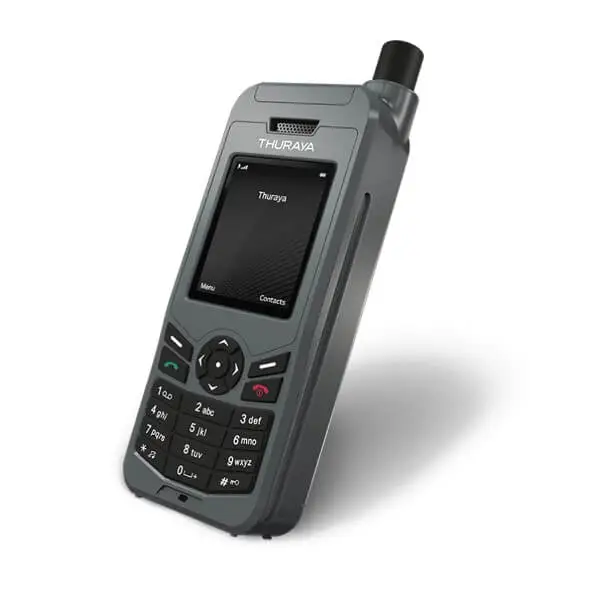
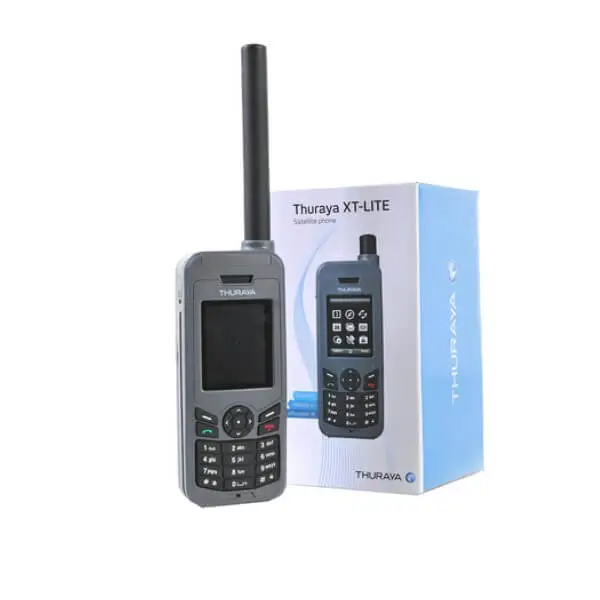
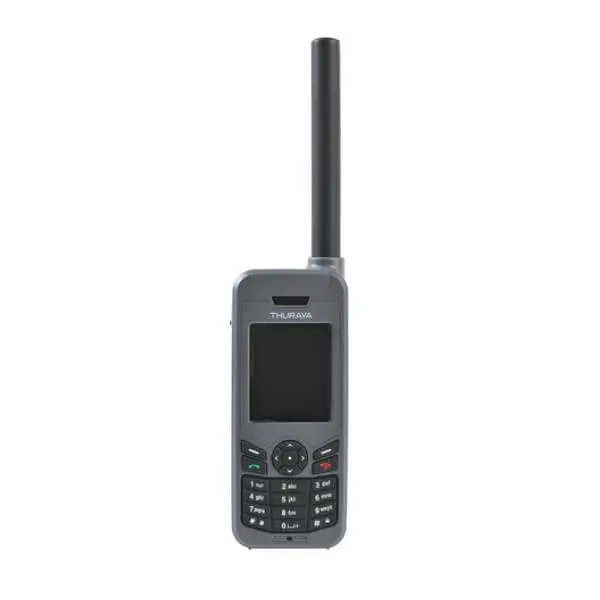
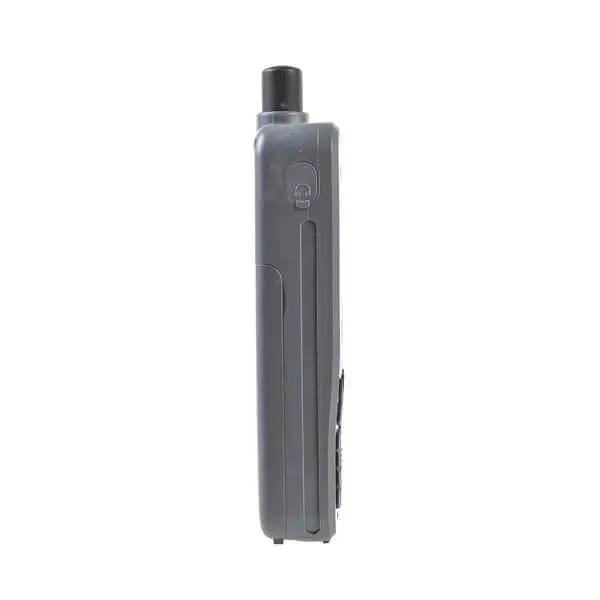
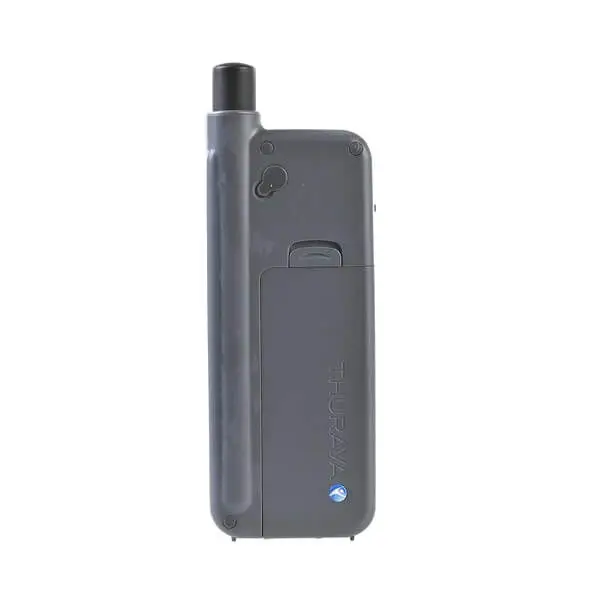
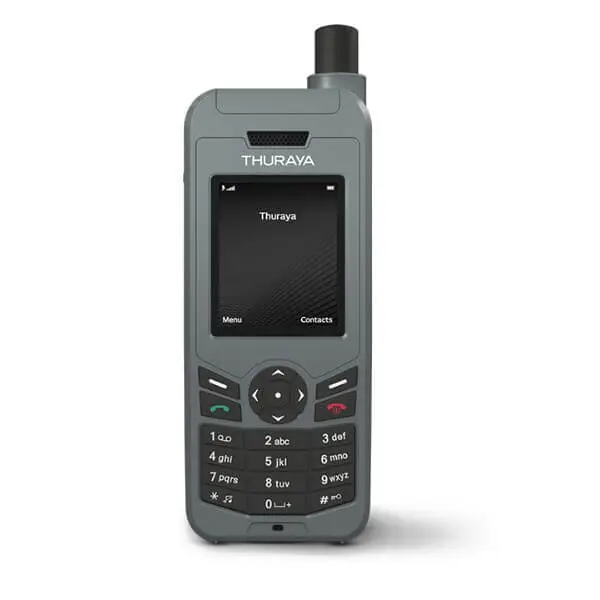
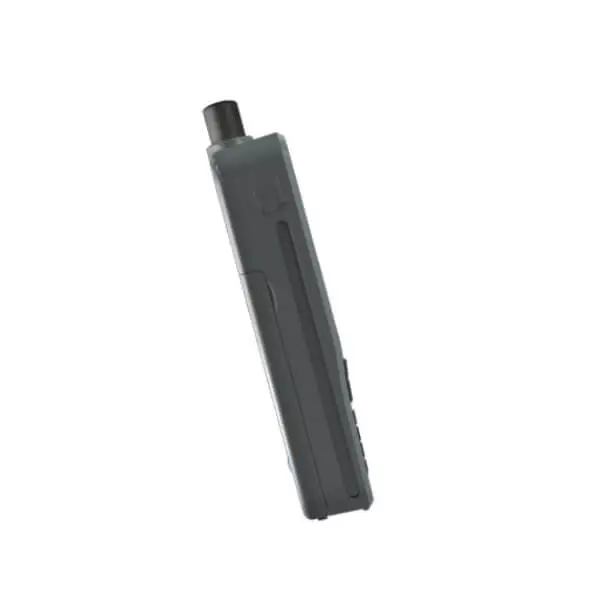
Designed for satellite calls and text messages when terrestrial mobile service is unavailable.
Officially stated maximum talk time, with up to 80 hours of standby under stated conditions.
Compact handset at approximately 128 × 53 × 27 mm for practical field carrying.
Multi-language operation supports mixed teams and regional travel requirements.
Is Thuraya XT-LITE the right satellite phone for your requirement?
XT-LITE is a strong fit when the requirement is dependable satellite voice and SMS without the cost or complexity of a more advanced handset. It is especially relevant for users who may spend time beyond reliable mobile coverage but do not need satellite broadband, smartphone apps or high-speed data. A desert driver, survey engineer, security supervisor, remote-site technician or expedition leader may value a dedicated handset that is easy to keep charged and simple to explain to another user.
It is not the right choice for every satellite communication need. If the project requires broadband internet, cloud applications, large file transfer, CCTV backhaul, vehicle tracking, fixed-office connectivity or always-on data, a satellite data terminal or other connectivity platform may be more appropriate. If the user needs enhanced ruggedization, integrated SOS features, advanced navigation or dual satellite/cellular workflows, a higher-tier Thuraya model may be a better fit. Fourteck can compare these options before quotation so the selected device matches the real operating requirement.
Verified XT-LITE technical specifications
The following specifications are based on current Thuraya product information. Final package contents, compatible accessories, SIM/service arrangements and regional service conditions should be confirmed before ordering.
| Specification | XT-LITE details | Buying relevance |
|---|---|---|
| Primary services | Satellite voice calls and SMS | Suited to essential remote communication rather than broadband use. |
| Network band | L-band satellite service | Use depends on Thuraya network coverage, service activation and sky visibility. |
| Antenna | Omni-directional, walk-and-talk functionality | Useful for practical handheld calling when the user has suitable satellite visibility. |
| Talk time | Up to 6 hours | Field teams should still plan charging, spare power and testing before travel. |
| Standby time | Up to 80 hours | Helpful for emergency kits and intermittent use; real runtime varies with conditions. |
| Dimensions | 128 × 53 × 27 mm | Compact enough for vehicle kits, field bags and personal travel. |
| Weight | Approximately 186 g | Light enough for regular carrying without the bulk of a data terminal. |
| Network features | Call barring, diverting, conference calls, call waiting, closed user group and voicemail | Useful for business and managed-user communication workflows. |
| Organizer tools | Alarm, calendar, calculator, stopwatch and world time | Basic practical functions without smartphone complexity. |
| Interfaces | USB data cable for firmware work, 2.5 mm earphone jack and DC power | Accessory and firmware needs should be checked against the exact supplied package. |
Best fit
- Desert travel and off-road communication backup
- Remote site supervisors and field technicians
- Emergency communication kits
- Marine support where handheld satellite service is suitable
- Regional project teams needing voice and SMS
- Cost-conscious users who do not need satellite broadband
Consider another solution when you need
- High-speed internet or cloud application access
- Integrated SOS and advanced navigation features
- Dual satellite and cellular operation in one handset
- Fixed vehicle docking as a core requirement
- CCTV, Wi-Fi, office LAN or multi-user broadband
- Continuous tracking or telemetry as the primary need
How satellite calling with XT-LITE works in practice
A satellite handset behaves differently from an ordinary mobile phone. A terrestrial mobile phone normally connects to nearby cellular towers, while XT-LITE communicates through the Thuraya satellite network. That means users should plan for open-sky visibility and understand that buildings, covered parking, metal roofs, dense structures and other obstructions can interfere with the satellite path. A test call in a suitable outdoor location before starting a remote journey is a simple but important operational step.
Thuraya states that the XT-LITE can provide call notifications even with the satellite antenna stowed. For an actual call, however, users should follow the correct handset and antenna operating procedure and move to a position with suitable satellite visibility. In a vehicle or boat, an external antenna may be useful where compatible and correctly installed. If indoor operation is essential, buyers should discuss whether an approved repeater or a different fixed solution is more appropriate rather than assuming the handheld phone will perform normally deep inside a building.
For companies, the best results come from treating the phone as part of a communication procedure. Assign the handset to a responsible user, keep charging accessories together, document the satellite number, store key contacts, confirm the SIM and airtime status, perform periodic test calls and make sure staff know where they need to stand for a usable signal. These simple controls are often more important than adding extra features the team will never use.
Dubai and UAE deployment scenarios
In Dubai, the handset is relevant mainly when the user leaves dependable urban mobile coverage or wants a second communication path for field work and travel. A contracting company may issue one to a supervisor visiting remote worksites. A desert tour or off-road team may keep it as an emergency communication device. A logistics operator may include a handset in a vehicle kit for routes where mobile coverage is uncertain. A marine business may use a handheld satellite phone as part of a wider communications plan, subject to coverage, operating conditions and any applicable regulations.
Abu Dhabi buyers may have requirements tied to energy sites, desert roads, islands, remote facilities and project mobilization. In Sharjah and the Northern Emirates, use cases may include industrial work, marine support, transport, outdoor projects and business continuity. The same product can serve different needs, but the deployment plan should change with the environment. A single traveller may need only a handset, charger, compatible service and clear operating instructions; a company with multiple units may need asset labeling, user assignment, charging schedules, airtime controls and a documented emergency contact procedure.
Fourteck can help UAE customers define the requirement before purchase instead of selecting only by model name. This matters because the correct decision may be XT-LITE, a higher-tier Thuraya phone, a satellite broadband terminal, Starlink hardware or another service entirely. The objective is to match the communications risk to the right equipment rather than to make a satellite phone perform a job it was not designed to do.
SIM, airtime and service planning
The handset requires compatible Thuraya service and an active SIM arrangement. The exact SIM type, plan, prepaid or postpaid structure, activation process, roaming conditions, validity, recharge method and permitted use can depend on the service package and operating region. These commercial details should be confirmed at quotation stage rather than assumed from a handset-only listing.
For an emergency kit, buyers should avoid a common mistake: purchasing the hardware and then leaving it untested for months. The phone should be charged, the service should be active, important contacts should be saved, and a test call should be performed before the device is relied upon. For business teams, it can also be useful to document who is responsible for airtime, how often the handset is tested and where spare charging accessories are stored.
If a project spans multiple countries, confirm current Thuraya coverage and local requirements for each destination. Thuraya describes its network as covering more than 160 countries across a large part of Europe, Africa, Asia and Australia, but this does not mean every route, indoor environment or local regulatory situation is identical. Coverage maps, service eligibility and local rules should be checked for the intended operating area before deployment.
Accessories that may improve real-world usability
Accessories should be selected around the operating environment rather than added automatically. Thuraya documentation lists items such as earphones, travel chargers, car chargers, USB data cables for firmware work, spare batteries, solar charging options, external antenna solutions and indoor repeater options. Compatibility and availability should be confirmed for the exact XT-LITE package and intended use.
Vehicle use
A car charger and a suitable external antenna may be useful for road teams that need power and better satellite visibility around a vehicle.
Remote field work
Spare power or solar charging can support longer assignments where access to mains electricity is limited.
Team communication
An earphone can be useful where hands-free operation is needed and the environment allows safe use.
Indoor requirement
If regular indoor satellite operation is required, discuss a compatible repeater or another engineered solution rather than relying on handheld reception through structures.
XT-LITE compared with other Thuraya handset choices
The key decision is not which Thuraya phone has the longest feature list. It is which handset best matches the user’s risk, environment and communication requirement. XT-LITE is intentionally simple. Buyers who need more professional features should compare the alternatives before ordering.
| Model | Best suited to | Why a buyer may choose it | Fourteck link |
|---|---|---|---|
| XT-LITE | Essential satellite voice and SMS | Simple operation, compact size and lower-complexity field use. | Current page |
| XT-PRO | Professional field teams | More advanced feature set, navigation and rugged professional positioning. | View XT-PRO |
| XT-PRO DUAL | Users combining satellite and terrestrial mobility | Appropriate when the workflow needs a more advanced dual-network handset class. | View XT-PRO DUAL |
| Thuraya One | Users wanting a modern cellular/satellite smartphone class | Better fit where smartphone-style functions and multi-network use are important. | View Thuraya One |
| X5-Touch | Advanced smart satellite-phone workflows | An alternative for buyers comparing smartphone-style satellite devices. | View X5-Touch |
What XT-LITE does not replace
XT-LITE should not be positioned as a substitute for satellite internet. A phone call or SMS can keep a field user reachable, but it does not provide the network capacity a remote office may need for email, cloud systems, video conferencing, IP phones, CCTV, ERP applications or multi-user Wi-Fi. Where the business requirement includes those services, buyers should evaluate a satellite broadband platform and a proper network design.
It also should not be treated as a universal marine, vehicle or indoor system without design checks. Boats, moving vehicles, enclosed facilities and permanent operational sites can require dedicated antennas, mounts, power, repeaters or purpose-built terminals. Fourteck can help determine whether a handheld satellite phone is enough or whether the project needs a more engineered solution.
Buying checklist for Dubai businesses and individual users
1. Define the communication goal
Decide whether you need emergency calling, routine remote-site contact, travel backup, marine support or a company continuity device.
2. Check intended locations
Review the planned countries, routes and project areas against current Thuraya coverage and any local usage requirements.
3. Confirm service and SIM
Make sure the quotation clearly states the handset package and how SIM activation, airtime and recharge will be handled.
4. Select accessories
Choose charging, spare power, earphone or antenna options only where they improve the actual deployment.
5. Plan operating procedure
Assign users, store emergency contacts, explain open-sky operation and schedule test calls for business continuity kits.
6. Compare before buying
If you need SOS, navigation, cellular integration or data, compare XT-LITE with higher-tier handsets or satellite internet first.
Regional use across the GCC and Africa
Dubai is often a procurement point for teams that later operate in other GCC countries or African project locations. A buyer may need one handset for travel to Oman, a group of units for remote infrastructure work, or a standardized communication kit for regional supervisors. In these cases, coverage should be checked for each intended operating area rather than assuming that one successful UAE test proves service everywhere on the route.
For East African or wider African deployments, the practical concerns can differ from a Dubai office requirement. Remote power availability, charging access, travel distance, local communications regulations, emergency procedures and staff training can all affect the final equipment list. A field team may benefit more from spare power and a documented call schedule than from advanced features, while a permanent site may be better served by a satellite data terminal with Wi-Fi and network integration.
Fourteck can support requirement discussions that connect UAE procurement with regional deployment planning. Customers can also use the wider Fourteck network for related infrastructure needs through Fourteck UAE, Fourteck Uganda, Fourteck Kenya, Fourteck Tanzania and Fourteck Africa where relevant to the project.
Operational readiness before a remote trip or project
A satellite phone delivers the most value when users are prepared before they lose mobile coverage. Charge the handset, confirm the service is active, perform a test call, store key numbers, pack the correct charger, and check that the intended destination falls within the current service footprint. If the phone will be issued to another person, show them how to extend and position the antenna, where to stand for a clear view of the sky, and how to recognize whether the handset has successfully registered on the network.
For a corporate emergency kit, it is useful to add a simple inspection routine. Check the battery periodically, confirm the SIM and airtime remain valid, test the handset on a schedule, keep a printed quick-start note with the unit and maintain a record of who has custody of the device. If the phone is stored in a vehicle, consider the effect of heat and long periods without charging. If it is used around water or harsh conditions, discuss protective carrying options and whether another rugged handset would be more appropriate.
For marine or vehicle operations, handheld use should be assessed realistically. Metal structures and enclosed cabins can block satellite visibility. An external antenna can improve the operating arrangement in some cases, but the correct accessory and installation method need to be confirmed. If the requirement is for a permanently installed communication system, a dedicated maritime or vehicle solution may provide a more predictable result than a handheld phone used as an improvised fixed terminal.
Why buyers choose a simple satellite phone
Satellite communications projects often become unnecessarily complicated because buyers start with technology instead of the communication need. If the requirement is simply to make a voice call or send an SMS when mobile service disappears, a dedicated handset can be easier to manage than a broadband terminal, router, Wi-Fi network and subscription package. XT-LITE follows that simple model.
This simplicity can also reduce training overhead. A driver, engineer or traveller does not need to understand satellite networking architecture to use a phone. The important training points are service status, antenna handling, open-sky use, battery readiness and contact procedure. For organizations with many occasional users, that can be a meaningful operational advantage.
Pricing and quotation factors
The final cost of an XT-LITE requirement can depend on more than the handset itself. Quantity, SIM arrangement, airtime, accessories, spare batteries, charging options, delivery destination and any project-specific support can affect the quotation. Online marketplace prices can also change frequently and may not include the same package or service arrangement. For that reason, this page does not present a fixed price or stock claim.
For a clear Fourteck quotation, provide the number of units, intended country or route, expected use, whether a SIM or airtime is required, and any accessories such as car charging or external antenna support. This allows the quotation to reflect the actual deployment rather than only the handset model.
Thuraya XT-LITE FAQ
What can the XT-LITE do?
It is designed primarily for satellite voice calls and SMS. It is not positioned as a modern satellite broadband or smartphone-data device.
How long does the battery last?
Thuraya lists up to 6 hours of talk time and up to 80 hours of standby. Actual runtime depends on operating conditions, battery condition and usage.
Can I use XT-LITE inside a building?
Direct handheld satellite operation generally needs suitable satellite visibility. Buildings and other obstructions can affect service. If indoor use is required, discuss a compatible repeater or another engineered solution.
Is XT-LITE suitable for desert travel?
It can be a practical voice and SMS backup for desert travel when the route is within Thuraya coverage, the service is active and the user follows correct satellite operating procedures.
Can it be used in a vehicle?
Handheld use may be affected by the vehicle structure and satellite visibility. A compatible external antenna can be useful for some applications. XT-LITE is not a substitute for a purpose-built fixed vehicle terminal where permanent installation is required.
Does XT-LITE support a fixed docking unit?
Thuraya’s published FAQ states that fixed and vehicle docking units are not supported for XT-LITE. Buyers needing that style of installation should compare other solutions.
What accessories are useful?
Depending on the use case, buyers may consider charging accessories, spare power, earphones, external antenna options, USB data cable for firmware work or indoor repeater solutions. Compatibility should be confirmed before ordering.
Does it work everywhere in the world?
No satellite phone should be described as working everywhere. XT-LITE works within the Thuraya service footprint, and buyers should check the current coverage map and local requirements for the exact operating area.
Do I need a Thuraya SIM and airtime?
The handset requires compatible Thuraya service. The exact SIM, activation and airtime arrangement should be confirmed in the quotation for the intended region and usage.
Is XT-LITE better than XT-PRO?
It depends on the requirement. XT-LITE is focused on simple voice and SMS. XT-PRO is aimed at users who need a more advanced professional feature set. The better choice is the one that matches the operational need.
Can Fourteck quote multiple units for a project?
Yes. Business buyers can provide quantity, destination, intended use, SIM or airtime needs and accessory requirements so the quotation can be prepared around the project scope.
How should I prepare the phone before travel?
Charge it, confirm the service is active, perform a test call, save important contacts, pack the correct charger and review the intended route against current Thuraya coverage.
Request a Thuraya XT-LITE quotation from Fourteck
Tell Fourteck where the phone will be used, how many units you need and whether your requirement includes SIM, airtime, vehicle charging, spare power or antenna support. We can help you compare XT-LITE with other Thuraya handsets or satellite connectivity options before the final purchase decision.
Reviews
There are no reviews yet.